
I have spooled more line onto more reels than any one man needs to, and a fair amount of it was line I talked myself into buying. So when I tell you that Berkley Trilene XL has held a spot on two of my reels for the better part of four seasons, that is not a compliment I hand out loose. I have also stripped it off in disgust after a bad afternoon. Both of those things are true, and a review that only tells you one of them is not worth the time it takes to read.
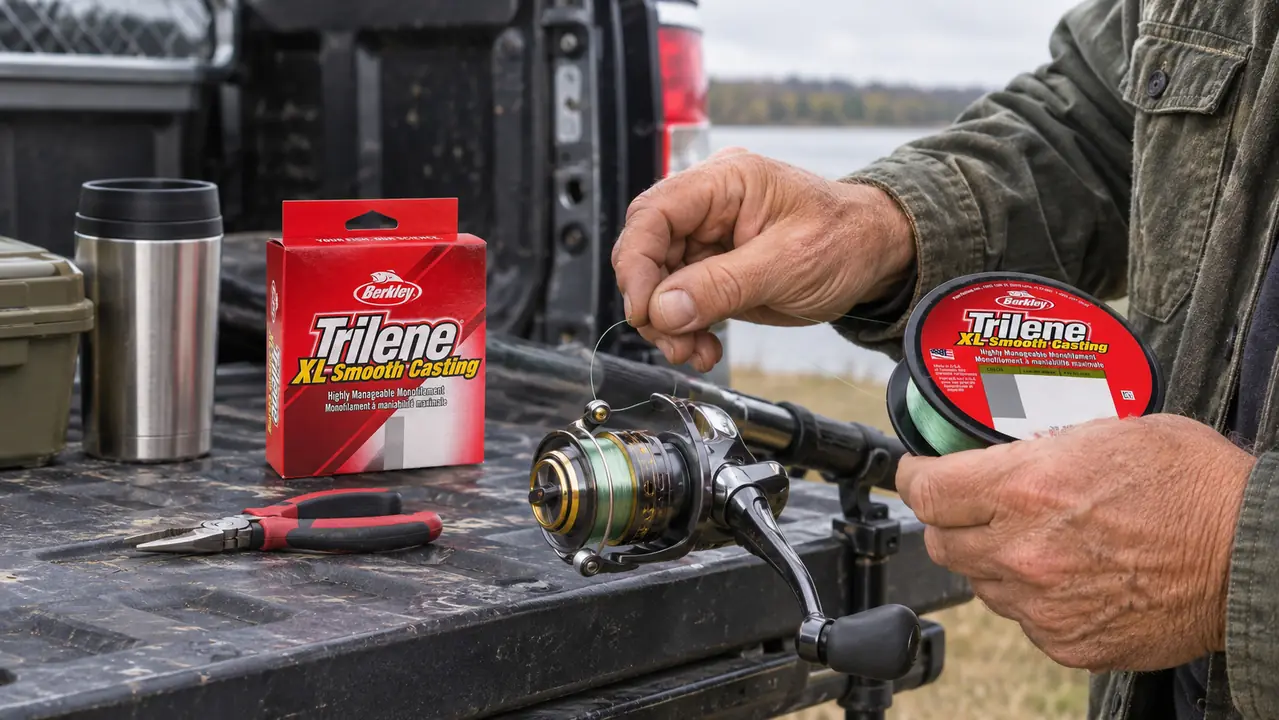
Short version before the weeds. Trilene XL is a monofilament, six-pound test on the spool I keep buying, 330 yards of it at 0.009 inch, or 0.22 millimeter, diameter. It does two things about as well as anything on the shelf: it casts a light lure a long way on a spinning reel, and it stays soft enough to behave while it does it. It also does a few things badly, and if your fishing is all rock, timber and laydowns, those few things will cost you fish. I will get to both sides, and I will tell you which side wins for the water I actually fish outside Dothan.
The Quick Verdict
Soft, forgiving six-pound mono that throws a light lure with almost no fuss. It abrades fast in cover, and it is a wear item you respool, not an installation.
Amazon Check Today's Price →Soft six-pound mono for a spinning reel and a small lure
If your casts are short, accurate and frequent, and you want line that comes off the spool without an argument, this is the spool I keep buying. Check the current listing for the break strength and yardage that fit your water.
Amazon Check Today's Price on Amazon →How I've Used It
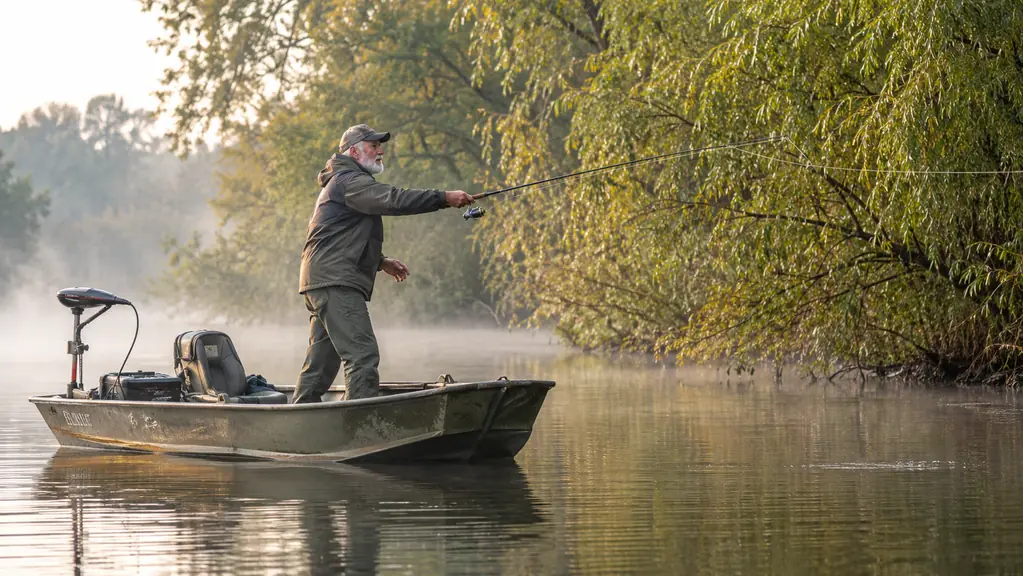
My fishing is not glamorous. It is a fourteen-foot aluminum jon boat with a trolling motor clamped on the back, a farm pond off a county road, or the standing timber on Eufaula when the water is right. My brother-in-law Earl comes along most Saturdays and out-fishes me about half the time, which I have made peace with. Tater rides in the truck and supervises from the bank. That is the whole operation, and it has not changed much in twenty years.
I spooled six-pound Trilene XL on a medium-light spinning rig three or four seasons back because I wanted something that would throw a small crankbait and a weightless worm without me having to think about it. It has been on that reel ever since, with a respool every spring and any time I get careless and leave the rod in the truck bed for a month. Bass, crappie, bream, a few channel cats, and one gar I would rather not discuss. The line has not been the reason I lost any of them, though I have lost fish to it, and I will say so further down.
That first spool went on in late March, a Saturday, on the tailgate of the Silverado with Earl holding the filler spool on a pencil and complaining about the wind. I filled it a hair under the lip, tied a small crankbait on, and made about forty casts along a pond dam without a single loop. That first afternoon is probably why I stayed with it as long as I have. First impressions are hard to shake, and mine was a line that did exactly what I asked it to do for three hours straight without me thinking about it once.
Before that I bounced between whatever was on sale, and I had a stretch where I blamed the rod for a pile of problems that were really the line. That is worth saying out loud, because half the complaints people have about casting distance and tangles trace back to old, stiff, sun-cooked monofilament, not the reel. Once I started treating line as something that wears out on a schedule, my whole opinion of mono changed.
What Nobody Tells You About Casting Distance
Monofilament gets tagged as the beginner's line, and in some ways that is fair. But the specific thing Trilene XL does is stay soft, and soft is what a spinning reel wants. The listing calls it easy-casting, which is the kind of phrase I usually file under marketing, except here it happens to be accurate. Soft line comes off the spool in cleaner loops, and cleaner loops are the whole ballgame when you are throwing something that weighs almost nothing.
I can put a small crankbait far enough to reach a brush pile I cannot get the boat close to, and I can do it sidearm under a willow branch without the line jumping off the spool. Braid will outcast it eventually, but braid also costs more, needs a leader most of the time, and digs into itself if you spool it loose. For the way I fish, which is a lot of short accurate casts and a handful of long ones, the softness is worth more than the extra distance.
Then the wind comes up, which on Eufaula it does most afternoons by about two o'clock, and that loop of line in the air turns into a sail. I have watched a sidearm cast that was perfect at nine in the morning become a bird's nest at two in the afternoon because a gust caught the belly of the line mid-flight and dumped it back on the spool. That is not a Trilene problem, that is a monofilament problem. The answer is to cast lower and shorter and quit trying to be a hero into the wind.
Here is the part the box does not tell you. Castability degrades. New line off a fresh spool is a different animal from line that has sat in a hot truck since May. It stiffens, it holds coils, and it starts throwing little loops that turn into tangles halfway through a cast. Line is a wear item, not an installation. Once I accepted that and started respooling on a schedule, my opinion of this line went up a good bit, because the failures I was having were maintenance failures wearing the line's name tag.
The Wet Strength Claim and What 0.22mm Buys You
The listed numbers are six-pound break strength, 2.7 kilograms, on a 0.009 inch or 0.22 millimeter diameter, in a 330-yard spool that works out to 301 meters. Those numbers matter more than the branding on the label. A 0.22 millimeter line is thin, and thin is what lets a small lure act like a small lure instead of dragging through the water like a wet sock.
Berkley claims optimal wet strength, meaning it holds up when it is submerged. My honest take after several seasons is that wet strength for mono is less about one long soak and more about how the line handles repeated cycles of wet and dry, sun and shade, hot boat deck and cold morning. Trilene XL handles that reasonably well, better than the bargain spools I used to buy. I still do not trust any mono to sit on a reel through a whole Alabama summer without going brittle, because nothing survives that, and I have had August break-offs on line that went on in March.
That is not a knock on Berkley in particular. That is monofilament. If you want a line that shrugs off heat and ultraviolet light, you want braid, and you accept the tradeoffs that come with braid. What I will credit XL with is that it fails gradually and visibly. You can feel it stiffen and you can see it go chalky, and that is your warning to cut it back or respool. A line that warns you is worth more than a line that just lets go.
Where It Falls Apart
Abrasion, first and worst. Six-pound mono and a rock ledge do not get along, and neither does six-pound mono and laydown timber. I have lost fish to nicks I did not check for, and the fix is boring and free: run the last few feet through your fingers after every fish and every snag, and cut back past anything that feels rough. Do that and the line lasts a long while. Skip it and you will lose the best fish of the day and blame the line for it.
I lost one on a creek bend near the house two summers back, a solid largemouth that ran straight into a shell bar and cut me off maybe four feet above the bait. I never felt the nick going in. When I checked the line above the break it was rough as a file for six inches. That is the whole lesson in one fish: the line was sound, the last four feet of it were not, and I never once looked at them.
Memory is the second problem. Coils that hold their shape off the spool and wrap around the rod tip on the first cast of the morning. Some of that is the line and some of it is how it was spooled and stored, but a filler spool that has been sitting in a hot garage is going to come off in a spring no matter that it says Berkley on the label. Line conditioner helps. A proper spooling job helps more. Neither one is a cure.
Third is stretch. Mono stretches, and that is a feature as much as a bug. Stretch forgives a hookset that is a little early and it keeps a thrashing fish from tearing a treble hook out of soft lips. It also means you cannot feel a soft bite the way you can with braid, and it means a long cast has more slack in it than you think it does when the wind is blowing.
The break-offs I blamed on this line were almost all line I should have cut off after a snag. Once I got honest about that, the line stopped letting me down.
Spooling It Right Matters More Than the Line
Here is the thing I wish somebody had told me twenty years ago. A 330-yard spool is not one reel's worth, it is several. I get a full fill on a spinning reel and still have line left for the next season or the spare spool. The mistake I made for years was dumping an entire filler spool onto one reel, which fills past the lip, which is a guaranteed way to throw loops on the first cast.
I run cheap ten-pound mono as backing on a deep spool, fill that to within about a quarter inch of where I want the working line to end, and then top it off with the Trilene. On a 330-yard spool that gets me two or three seasons of refills instead of one, and the backing never sees daylight, so it does not matter what it is as long as it is on there snug and even.
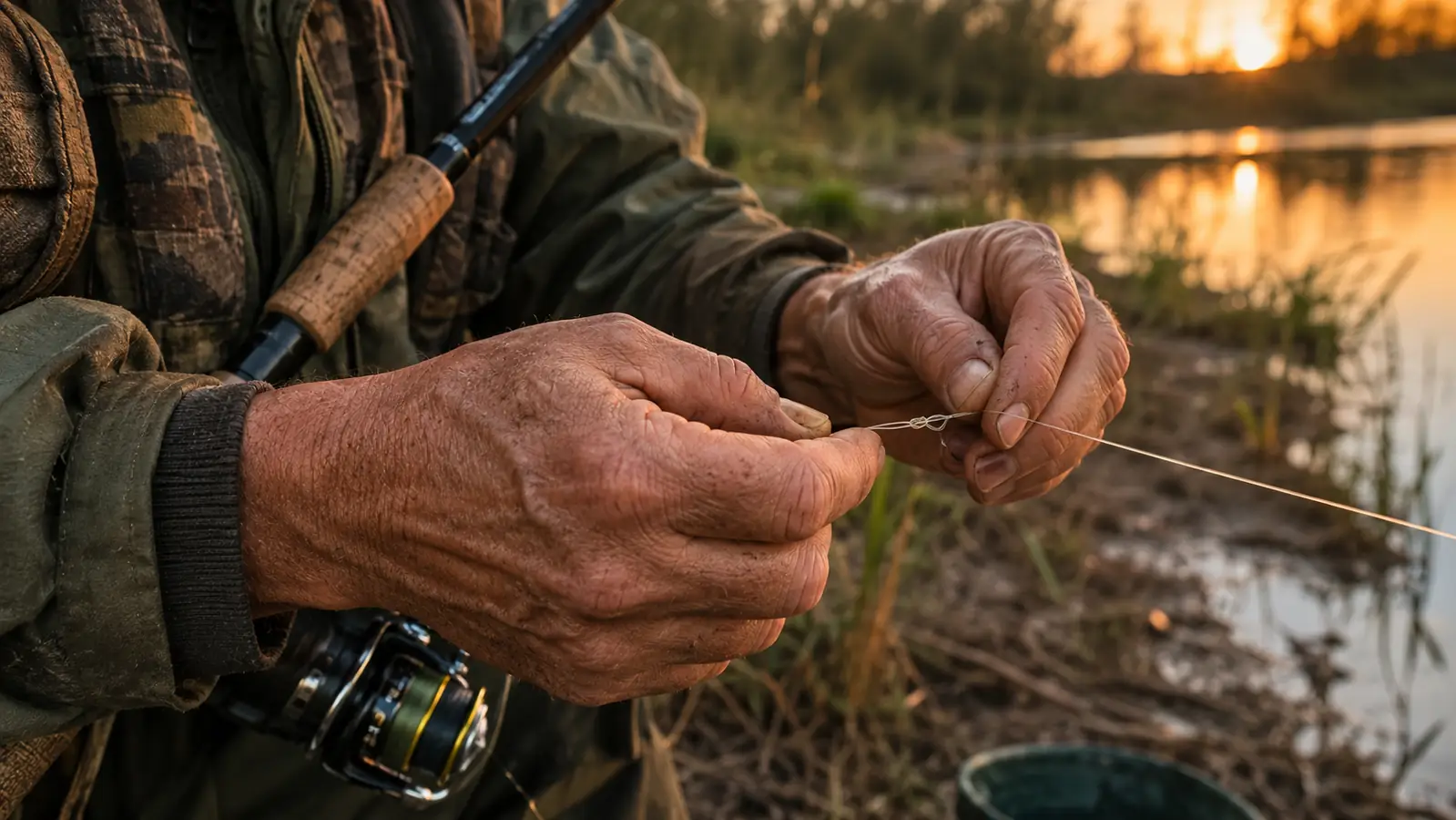
Fill to about an eighth of an inch below the lip. Use backing on a deep spool so you are not burning good line to fill empty space. Run the filler spool on a pencil or have somebody hold it with light tension, and reel it on with the line coming off the spool in the same direction the reel turns. Get that backwards and you will put twist in it that you will fight for the rest of the season.
Then maintain it. Cut back the last few feet when it feels rough. Respool in the spring whether it looks like it needs it or not. Keep the rod out of a hot truck cab for weeks at a time. None of that is fun and none of it sells tackle, which is exactly why you do not hear it from the people selling tackle.
Is Six-Pound Too Light for Real Fishing
Six-pound is the spool I buy, and six-pound is not a line for everything. In open water with a light wire hook and a small lure, it is about perfect. Around flooded buck brush it is a liability, and I say that as somebody who has tried to make it work because he did not want to change spools. If a fish can get a wrap on a limb, six-pound is going to lose that argument every single time.
The Berkley lineup runs from two pounds up to thirty, so the honest answer to whether six-pound is too light is that six-pound might not be your number. What I can tell you is that the same softness that makes this line cast well is the thing that makes it a poor choice for winching a fish out of cover. Pick your weight for your water, not for the label on the spool you happened to grab first.
What I Liked
- Soft enough to throw light lures on a spinning reel without drama
- Comes off the spool in clean loops when it is fresh
- Stretch forgives early hooksets and keeps treble hooks planted
- A 330-yard spool covers several fills across a season
- Wears predictably, so you can feel it going before it fails
- Standard mono knots seat and hold reliably when you wet them
Where It Falls Short
- Abrades quickly around rock, shell and laydown timber
- Goes brittle in heat and sun faster than braid
- Stretch costs you bite sensitivity on long casts
- Needs a respool at least once a season
- Six-pound is too light for heavy cover
- Coils badly if you spool it backwards or let it sit in a hot garage
Who This Is For
You throw small lures on a spinning reel and you fish open water, pond banks, or the edges of cover instead of the middle of it. You want line that comes off the spool without you thinking about it, and you are willing to respool once a season rather than pay braid prices and tie leaders all morning. You probably fish from the bank or a small boat, and you are not trying to win anything.
You also have to be the kind of person who checks the last few feet of line after a snag. That sounds like small advice. It is the single biggest thing separating the people who like this line from the people who curse it, and it costs nothing but a few seconds.
Who Should Skip It
If your water is rock, shell beds or heavy timber, skip it or step way up in break strength. Six-pound mono in that stuff is a donation. If you fish deep and need to feel a bait ticking bottom, braid or fluorocarbon will do it better, and the stretch here will frustrate you before lunch.
Also skip it if you are the type to leave a rod in the truck all summer and expect it to be fine in October. Any mono will let you down. It will just be the line's fault in your mind instead of the truck's.
The spool that stays soft, if you keep up your end
Line is a wear item. Respool it once a season, check the last few feet after every snag, and six-pound Trilene XL will cast a small lure as well as anything you can put on a spinning reel. See the current break strengths and yardage on the listing.
Amazon Check Today's Price on Amazon →