
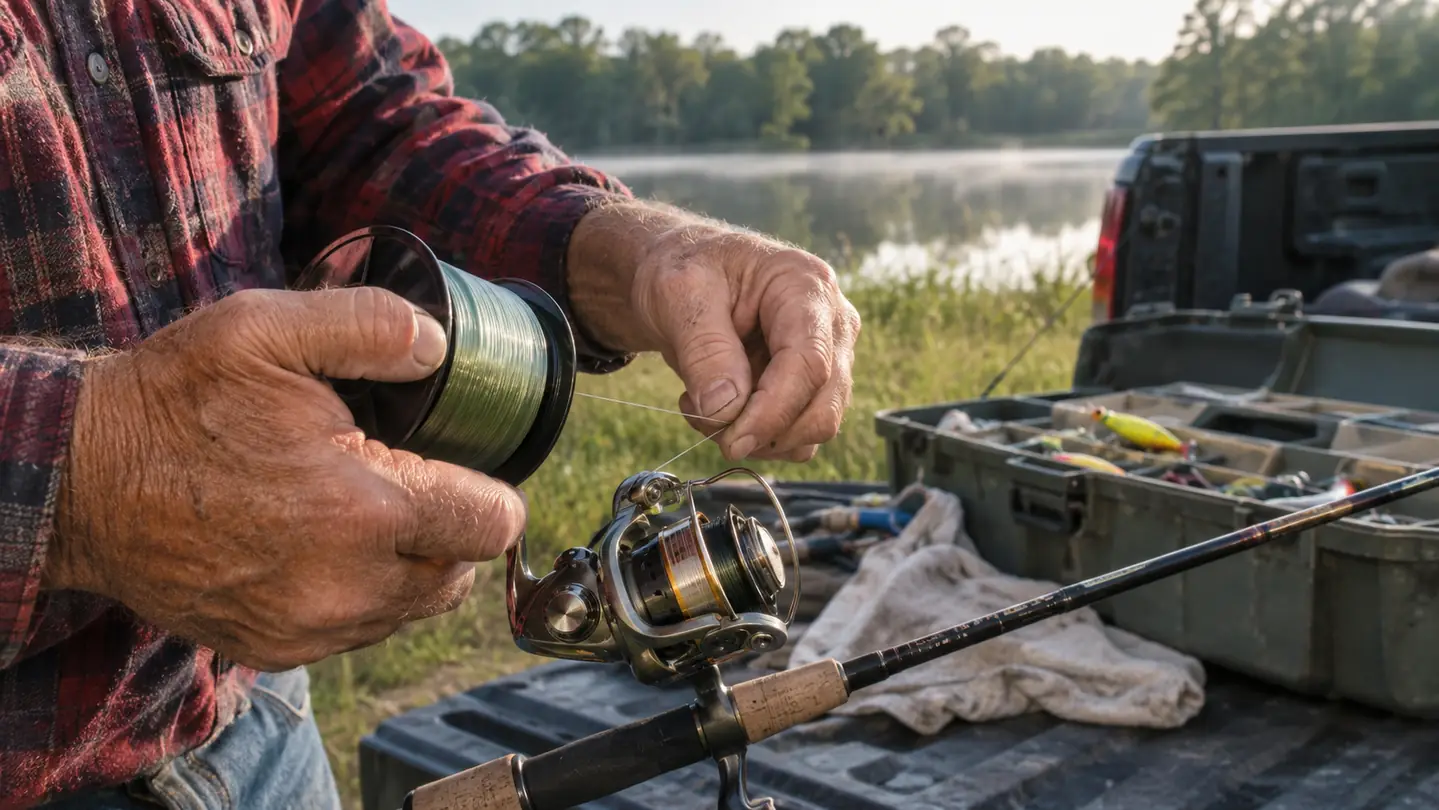
Every spring I watch somebody at the ramp peel a brand-new baitcaster spool down to the backing because a line experiment went sideways. I have done it too. Then I go back to the thing I have fished since I was a boy sitting on a pond bank with my granddad: a spool of six-pound Berkley Trilene XL. It is not the fashionable choice. It is the one that still puts bass in the boat on Lake Eufaula when the wind is up and my patience is short.
Here is what the tackle-shop conversation tends to miss. Most of us are not chasing prespawn giants on a tournament lake. We are fishing a farm pond after work, or working a bank on Seminole with a trolling motor and a cooler, or sitting in a fourteen-foot jon boat with my brother-in-law Earl arguing about whether the fish have moved shallow. For that kind of fishing, this spool does nearly everything you need. Below are ten reasons I still respring with it, in the order they come to me while I am rigging in the truck bed.
The Spool I Put On Every March
Six-pound Berkley Trilene XL, 330 yards, enough to fill a spinning reel twice with line left to trim. It is the first thing on the rod and the last thing I worry about.
Amazon Check Today's Price on Amazon →Six-pound test matches the fish you actually catch
Most of the bass I take out of a farm pond run between a foot and eighteen inches. A three-pounder is a good one and I get maybe two of those in a spring. The six-pound break strength on this spool is more than that class of fish can pull in open water, and it is light enough that a weightless worm still falls the way it is supposed to. I fished heavier line for two seasons because I read that I should, and my bite count dropped. Went back to six and the bites came back.
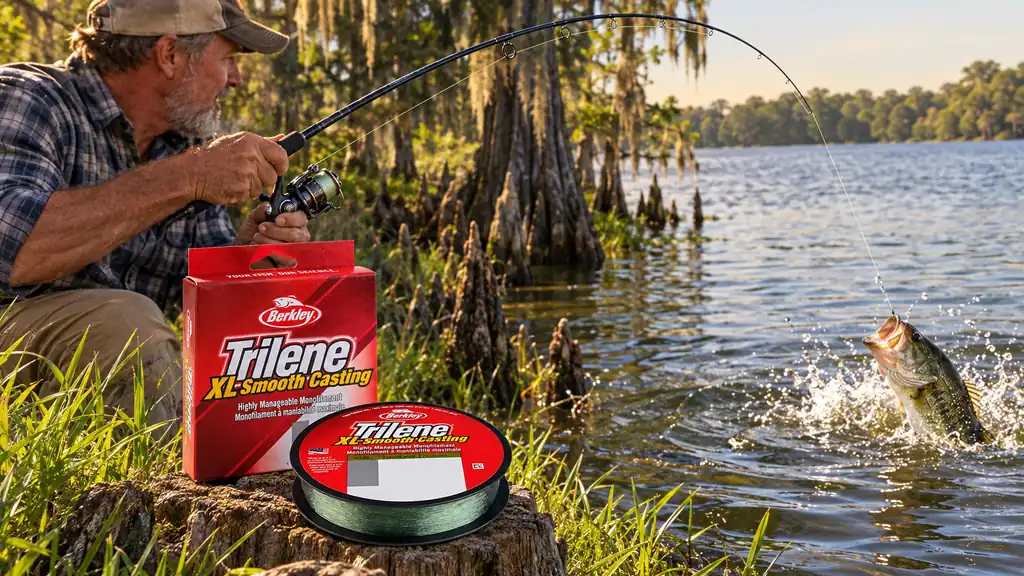
330 yards fills a spinning reel twice
One Berkley spool is 330 yards. A 2500-size spinning reel takes somewhere around 140 yards when it is filled close to the lip, so a single spool does that reel twice with line left over for trimming and cut-backs. I respool in the truck bed in March and I still have line on the shelf in July. There is a plain comfort in that. You are not rationing the stuff. When the last ten feet get scuffed on a shell bed, you cut them off and keep fishing.
It casts a light bait without a nest
The listing calls it easy-casting and that lines up with what my hands tell me. At 0.009 inches in diameter it comes off a spinning spool with barely any coaxing, which matters when you are throwing a small crankbait or a finesse worm into a crosswind. On the baitcaster I run it a touch tighter and thumb the spool, and it behaves. Stiff line wants to jump off the spool in coils. This one lays down. That is most of what I ask of a casting line on a pond.
A plain clinch knot holds under load
I tie an improved clinch and I have never had a reason to learn anything fancier. Five turns, spit on it, pull it down slow so it seats. I have lost fish to dull hooks, to lazy hooksets and to a drag I set wrong, but I cannot remember the last bass I lost to a clinch knot failing on this line. When you are fishing from the bank and every cast counts, a knot you can tie in the dark with cold hands beats a knot with a fancy name.
The same diameter catches bream and crappie
Six-pound line is not only a bass line in my boat. The diameter that a largemouth will take is small enough to fish a Beetle Spin for bream or a tiny jig under a cork for crappie when they move up the creeks in spring. I keep one rod rigged light and I do not change it. Earl will carry two rods and switch baits all afternoon. I would rather fish one rod and know what it will do. A line this thin covers more of what swims in these waters than folks give it credit for.
Six pounds of break strength is more than a pond bass can pull, and the 0.009-inch diameter is what gets him to bite in the first place.
A backlash picks out instead of becoming a respool
Anybody who fishes a baitcaster has a backlash story. The difference is what happens after. Braid digs into itself, and a bad one means cutting the spool down and starting over. Monofilament sits on top of itself and picks apart with a thumbnail and some patience. I have sat in the jon boat with Tater asleep on the front deck and worked out a nest in four minutes that would have ended a braid trip. That is not a performance number. It is just the kind of thing that keeps an afternoon from turning sour.
Wet strength holds after a fish runs
The listing notes optimal wet strength, and here is what that looks like on the water. Line that has been under the surface for two hours is still line. It does not go soft in your hand and it does not start fraying at the guide after every cast. I drag a Texas rig through grass and laydowns and it takes a beating. What I watch is the last three feet. When it feels rough between thumb and forefinger, I cut back and retie. On this spool I do that less often than I expect to.
Stretch buys you a heartbeat at the boat
Monofilament gives. That is the whole reason it stays on the rod I throw treble-hooked baits with. A bass that comes up and shakes his head beside the boat is loading the line hard and fast, and a line with some stretch absorbs part of that instead of passing all of it down to the hook holes. I still lose fish. But I lose fewer of them to torn hooks than I did on a no-stretch line, and I say that as a man who wanted the no-stretch stuff to work.
Snags break off where you want them to
When you hang a worm in a brush pile and the boat is drifting, something has to give. Most times the knot gives before the line does, and you get your bait back with a shortened leader. That is the outcome I want. A line that will not break means you either pull the boat into the junk or you cut a long run off the spool. I would rather retie than respool. Six-pound line breaks when I ask it to and holds when I do not.
It is the line to hand a beginner
If somebody new to fishing asked what to put on their reel, I would hand them a Berkley spool and not think twice. It casts easy, it knots easy, it forgives a mistake and it will not eat a season of your patience while you learn. My granddad started me on a cane pole and a bobber, and the first real rod I owned had six-pound line on it. Fifty years on I have tried the new lines. Some are good. None has made me a better pond fisherman than this one.
What I'd Skip
Braid on a pond rod, unless I am in heavy grass and need to winch a fish out of it. Fluorocarbon leaders on water that is stained anyway, since I have never seen the bite difference justify the fuss. Twenty-pound line on a spinning reel, which kills the cast and does not land more fish. And line that has sat on a shelf through two summers. Monofilament is not a lifetime buy. Respring in the spring and you will not be the fella at the ramp snapping rotten line off on the hookset.
I will say the plain thing too. This is not a heavy-cover line and it is not a big-current line. If you are fishing flooded timber with fifteen-pound fish, you want something with more backbone than six-pound mono. It is a pond and open-water line, and I fish it where I fish. Know what you are asking it to do and it will not surprise you.
Six Pounds of Line, One Spool, A Whole Spring of Pond Fishing
If you fish ponds, creek banks and open water for bass, bream and crappie, this is the spool I would hand you at the ramp. Respring it once a year and go fishing.
Amazon Check Today's Price on Amazon →