
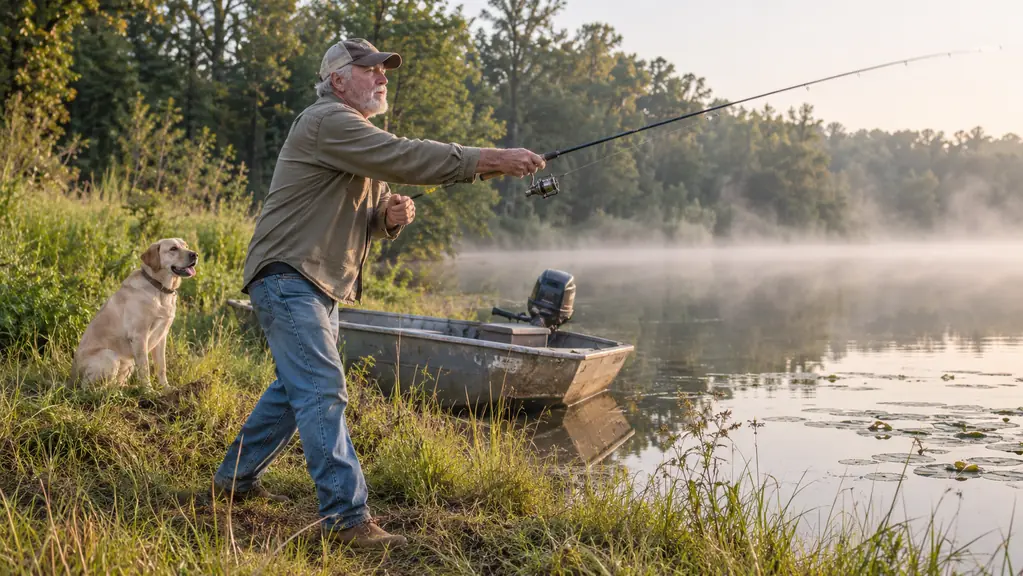
There is a spool of Berkley Trilene XL that has been living in the front compartment of my jon boat for two seasons now. It has been rained on, baked in July heat, and dragged through more red clay than I care to admit. I keep waiting for it to go stiff and start throwing loops at me the way the budget line I used to buy did. It has not done it yet.
That is most of the reason I am writing this down. Berkley Trilene XL is not new, it is not fancy, and half the bass fishermen on Eufaula learned to cast on it before they moved on to something else. But for the way I fish, farm ponds, creek banks, and a 14-foot aluminum boat with a trolling motor clamped on the back, it keeps doing the job and it keeps doing it the next trip. What follows is what two years of steady use actually looks like, including the parts I do not love.
The Quick Verdict
A soft, easy-casting 6-pound monofilament that stays fishable for a full season on the spool. It stretches more than I would like and it will not survive a shell bed, but I keep spooling it back up.
Amazon Check Today's Price →The spool I respool with every spring, without arguing with myself about it
Berkley Trilene XL in 6-pound test, 330 yards, 0.009 inch diameter. It has been on four of my reels and it is still the line I hand to somebody learning to fish a pond.
Amazon Check Today's Price on Amazon →How I've Used It
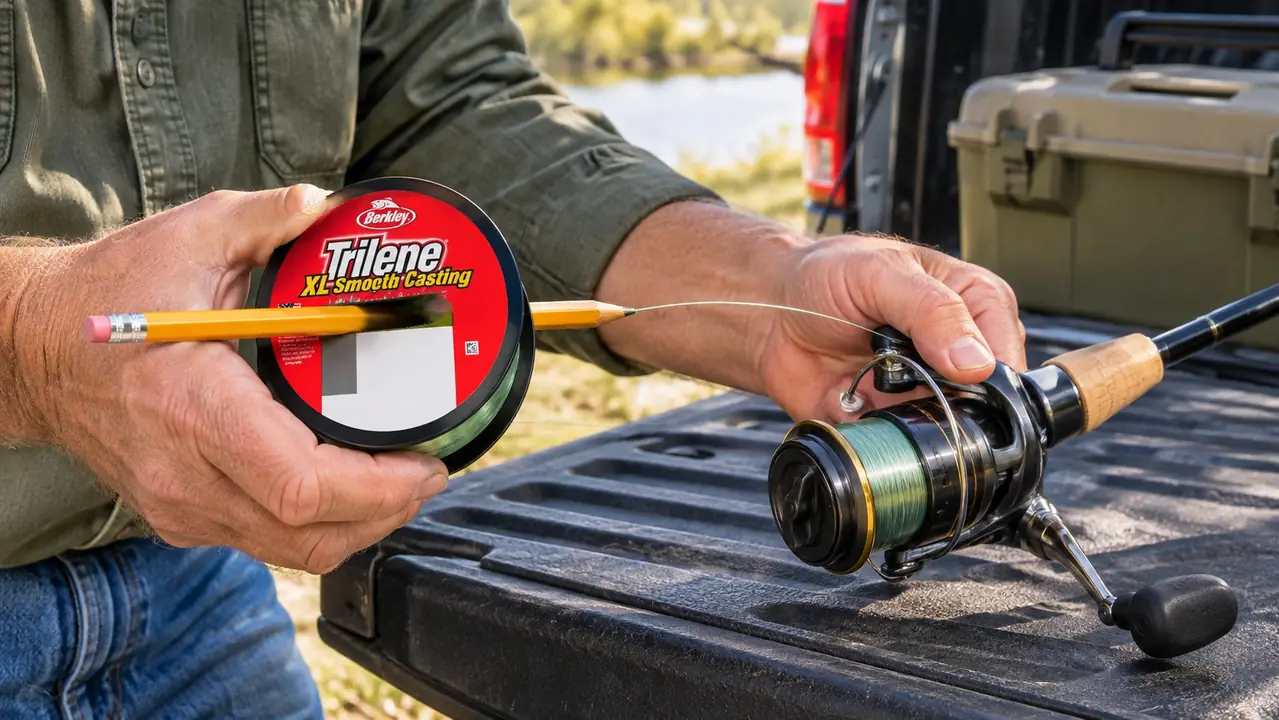
I bought my first spool for a reason that had nothing to do with brand loyalty. I was headed to a pond outside Dothan on a Saturday morning, the reel on my rod was spooled with line that had been sitting in the garage since the previous spring, and it snapped on the first cast with a little quarter-ounce spinnerbait. I stopped at the store on the way, grabbed a spool of 6-pound, and spooled it up sitting on the tailgate with a pencil through the hole while Tater watched from the truck.
Since then it has gone on four different reels. Two spinning reels that see the most work, one small reel I keep rigged for bream and crappie, and a baitcaster I am still not fully good with. The 6-pound breaks down to 0.009 inch diameter, which is thin enough that it lays on a spinning spool nicely and does not want to jump off in coils. That matters more than people give it credit for. A line that will not lay down costs you more fish than a line that will not hold a knot, because you never get a clean cast to begin with.
My brother-in-law Earl fishes with me most weekends in the spring and summer. He runs braid on everything and gives me grief about the mono. Then we get on a pond with a little stain to the water and he spends the first twenty minutes retying because he cannot feel what his lure is doing at the end of a long cast. That is the trade. I am not going to sit here and tell you mono is better than braid, because it is not. I am telling you what it feels like on the water, and 6-pound Trilene XL has a softness to it that lets me feel a bream tick a jig before the fish ever knows something is wrong.
What 6-Pound Test Actually Means on the Water
Berkley rates this line at 6-pound breaking strength, which is 2.7 kg if you like your numbers metric. The diameter is the part that matters to a fish. At 0.009 inch you are throwing something a largemouth can look at without spooking, and you can get a small lure down in the water column without adding lead. I fish a lot of little eighth-ounce jigs and small soft plastics for crappie, and 6-pound is the sweet spot for that work.
The trade is that 6-pound is not a heavy-duty line, no matter what the listing copy says about durability. It will land a two-pound bass all day long. It will also lose a four-pound bass that gets its head down in the grass, and it will lose any fish at all if you set the hook like you are trying to pull a stump out of the ground. I have learned to play fish on this line instead of horsing them. That is not a knock on the line. That is what 6-pound test is. If you are fishing heavy cover for bigger fish, size up or go to braid.
Where it earns its keep is in the range. The same 6-pound spool that handles a crappie jig will throw a small topwater at daylight, and it will hold a nightcrawler down on the bottom for catfish in the creek behind my place. That kind of flexibility is why I keep coming back. One spool at 330 yards covers a couple of reels with enough left over to respool a small one mid-season.
Casting, and What Easy-Casting Really Means
The listing calls it easy-casting, which is marketing language for a line limp enough to come off the spool without fighting you. In practice, on a spinning reel, that means fewer of those little loops that wrap around the spool lip and ruin your morning before the sun is up. I have had exactly one bad tangle in two seasons with this line, and it was my own doing. I had overfilled the spool and then tried to cast into a headwind with a lure that was too light for the rod.
On the baitcaster it is a different story and I will be straight about it. Mono this limp on a baitcaster with light lures wants to fluff up if your thumb is not educated yet. I spooled it on mine for throwing small crankbaits and I fought it for the first hour. Once I backed the brakes down and quit trying to throw it a country mile, it settled in and behaved. If you are brand new to a baitcaster, start with something stiffer. If you have some time on the reel, it is fine.
Distance is not the reason to buy this. Braid will outcast it and fluorocarbon will get a lure deeper. What mono does better than either is forgive. It stretches on the hookset instead of ripping the hook out, it takes a nick and keeps going for a while, and when it does finally go, it usually gives you some warning first.
How It Holds Up Over a Season
I started keeping notes because I got tired of guessing. I spooled a spinning reel in early April, fished it through the spring and into the summer, and replaced it in late August. That is five months of one or two trips a week, with the rod sitting in an open boat between them, in Alabama heat. The line never broke on a fish. It got to a point where it had taken enough sun and enough abrasion that I did not trust it anymore, so I cut it off and put fresh line on. That is a normal end of life for mono, not a failure.
The wet strength claim on the package is one of those things I cannot measure in a lab, but I can tell you what I saw. The line did not change noticeably after a full morning of fishing in the rain, which is more than I can say for cheaper mono I have used that turned milky and started acting different by lunch. Trilene XL held its feel from the first cast to the last one.
The thing that will shorten its life is the stuff you cannot see. Rocks, dock pilings, shell beds. I fish a creek near home that is all rock, and I check the last six inches of line with my fingers after every fish. A nick in 6-pound mono is a break waiting on a reason, and no line on the shelf changes that. What I will say for this one is that it does not hide the nick from you. It catches under your thumbnail and tells on itself, which is the best thing you can ask a line to do.
Storage matters too, and I learned it the hard way. The season I left a rod lying in the truck bed for a month, that spool got stiff and I had to respool a few weeks earlier than planned. That is not the line's fault. That is me being lazy with a rod I like.
Where It Comes Up Short
Stretch. Anybody who tells you mono does not stretch has not set the hook on a fish forty feet out with 6-pound line. There is a lag between the rod loading and the hook doing anything, and on a long cast with a soft rod it is noticeable. I have missed fish because of it. Braid does not have that problem and I understand exactly why people switch and never come back.
Memory is the other one. Trilene XL is better than a lot of mono on that count, but it still wants to coil off the spool after it has sat on a small reel for a couple of months. I run the line out behind the boat or across the yard a couple of times a season to pull the set out, and that helps a lot. It is a little bit of work a braid fisherman never has to think about.
Abrasion resistance is fine, not great. Against a shell bed or a sharp rock ledge, 6-pound of any brand is going to lose. Line weight handles that, not label. If I am fishing a rocky stretch of the Chattahoochee I move up to 10 or 12 pound and I do not ask 6-pound to survive it.
Last thing, and it is small. 330 yards is a good amount for two typical spinning reels but it is not enough to fill a big baitcaster properly. I ended up buying a second spool for that reason, which is worth knowing before you sit down to spool three reels off one box.
What I Liked
- Casts easy on spinning tackle, very few loops or tangles
- Soft enough to feel a light bite on a small jig
- 0.009 inch diameter at 6-pound keeps little lures in the strike zone
- Holds its feel through rain and summer heat for a full season
- 330 yards covers two spinning reels with a little left over
Where It Falls Short
- Stretches on long casts and costs you hooksets
- Still takes a set if it sits on a small reel for months
- Not built for shell beds or rock, 6-pound loses that fight
- Limp enough on a baitcaster that a beginner will fight it
Five months, one or two trips a week, sitting in an open boat between them in Alabama heat. It never broke on a fish. I cut it off because I quit trusting it, not because it quit.
Who This Is For
Bank fishermen and pond fishermen, mostly. If you are throwing small lures at bream, crappie and pond bass, and you want one line that works on a spinning reel without a lot of fuss, this is the one I would hand you. It is also a good line for teaching somebody to fish, because it is forgiving and because respooling after a kid birds-nests it does not hurt your feelings.
It also suits the guy who fishes a couple of times a month and does not want to think about line at all. Buy a spool in the spring, fill two reels, fish all summer, replace it next spring. No leaders to tie, no knots that need a diagram, no second guessing whether the line is the reason the fish are not biting. That kind of simplicity has value I did not appreciate until I got particular about tackle.
Who Should Skip It
If you fish heavy cover for big fish, skip it. Six-pound mono in lily pads or around laydowns is a donation to the lake. Move up to 12 or 17 pound, or go to braid and a leader and be done with it. If you fish deep structure and need to feel a bait ticking the bottom at thirty feet, the stretch will cost you fish and you will blame the line for it.
And if you are a baitcaster-first angler who throws light lures all day, this is not the line I would put in your hand. It is fishable, I have done it, but you will spend more time with your thumb on the spool than you want to. Same story if you fish salt or fish around oyster bars. Buy something built for that and keep this for the ponds.
Six-pound, 330 yards, and it will still be on the reel come August
This is the mono I keep respooling for pond bass, creek catfish and crappie jigs. Soft enough to cast all morning, honest enough to tell you when it needs replacing.
Amazon Check Today's Price on Amazon →