
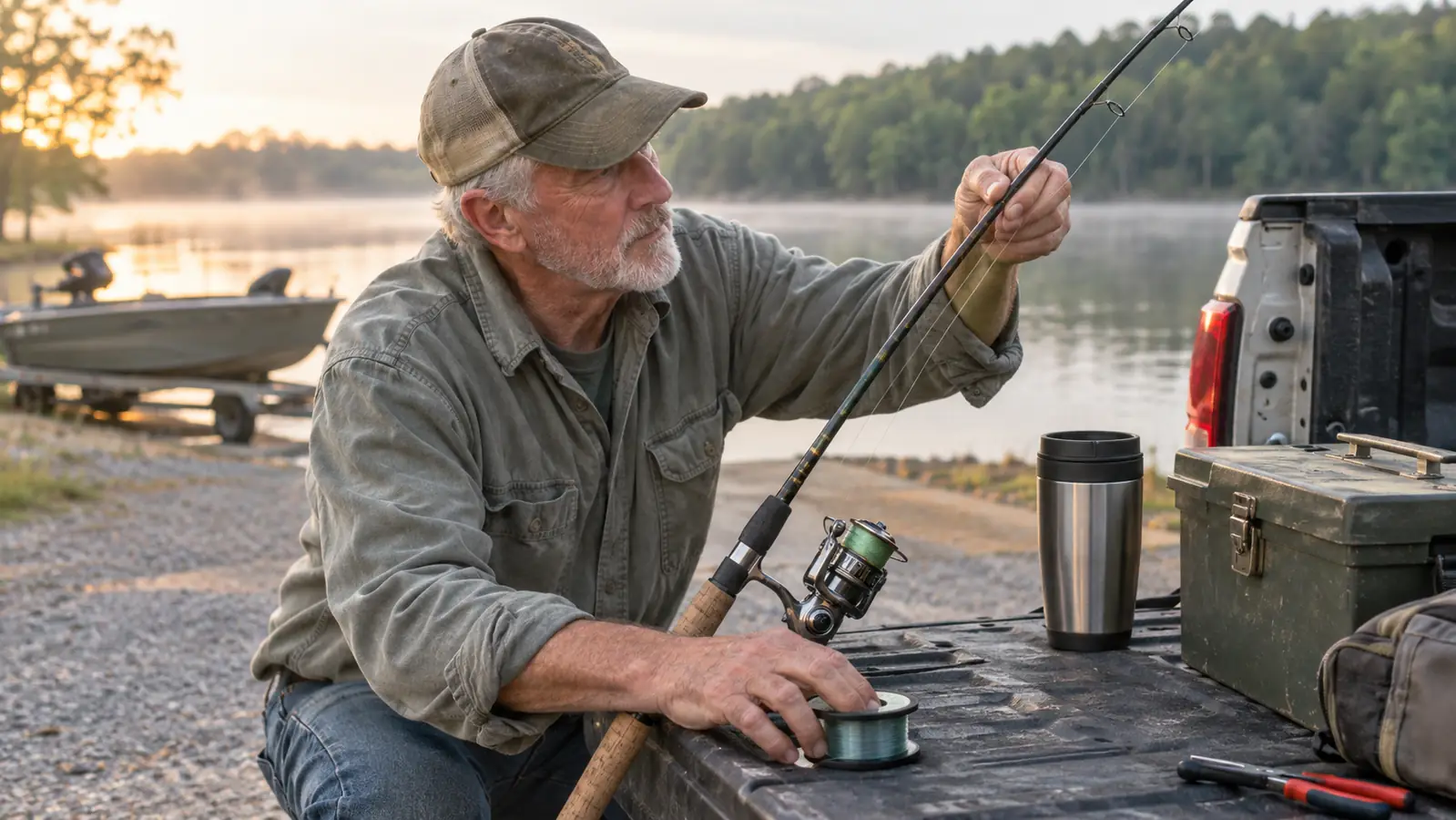
Line twist is what turns a good morning on the water into twenty minutes of picking loops out of a spinning reel with your thumbnail. I have watched grown men argue with a reel on the bank at Lake Eufaula like it said something ugly about their mother. Most of the time the reel is fine. The line went on wrong. Monofilament has memory. It holds whatever shape it was wound into at the factory, and if you spool it against that natural coil, the reel hands the twist back to you on every cast, in the form of loops, wind knots and a bait that helicopters instead of flying where you aimed it. A fresh spool of line and a five minute job is all that stands between you and a reel that behaves.
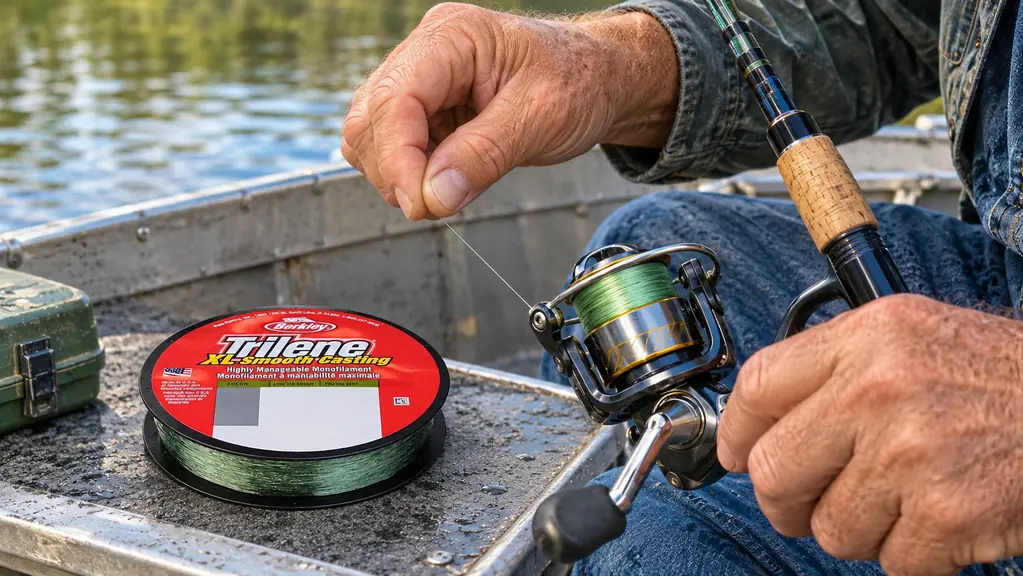
Berkley Trilene XL is the line I keep coming back to for pond and reservoir fishing, and it is also the line that taught me this lesson the hard way. The spool in my boat box is 6 pound test, 330 yards, 0.009 inch in diameter, which works out to 0.22mm. It is a single strand monofilament, it casts a light bait about as easily as anything I have put on a spinning reel, and it holds its strength well when it is wet, which matters more than most folks think when you are dragging a worm past a stump. It also coils like a spring if you rush the spooling. So here is the sequence I use now, in the order I do it.
Six Pound Line, 330 Yards, and the Only Spool I Buy Twice a Year
Berkley Trilene XL in 6 pound test is what I fill my spinning reels with for bass, crappie and bream in the Chattahoochee valley ponds. It comes in break strengths from 2 pounds up to 30, and the 330 yard spool is the size that makes sense for a bank and jon boat angler.
Amazon Check Today's Price on Amazon →Step 1: Match the Line to the Reel and the Rod Before Anything Else
A 6 pound line on a 2500 or 3000 size spinning reel with a medium light rod is the setup I hand to anybody who asks what to buy for farm pond fishing. The spool size and the line diameter have to agree with each other. Too heavy a line on a small spool and you lose casting distance because the line comes off in stiff coils that drag through the guides. Too light a line and a decent bass finds the one sunken log in the pond and takes the whole rig with it.
The 330 yard spool is the right size for this job. That is enough to fill a typical 2500 size spinning reel with a cushion left over for a top up in midsummer, and it means you are not splicing three leftovers together just to get a full spool. Fill from one continuous spool whenever you can. Keep the leftover Berkley Trilene XL wound on the original spool with a rubber band around it, not in a coffee can in the shed where it picks up dust and sawdust.
Set the drag before the line goes on, not after. Spin the drag down to something light, roughly a quarter of the 6 pound break strength, and check it by hand with the rod bent against it. A locked down drag on six pound monofilament is a two second fight and a lost fish, and the knot is usually the thing that gives, not the line. Get that right once and you stop blaming the line for a drag setting.
Step 2: Strip It Down and Leave Yourself a Base
Strip the old line off first. All of it, down to bare spool. You want to see the arbor so you know exactly where the new line starts and how much room you have before you get to the lip. If the old line has been on there two seasons it has flat spots and grit pressed into it, and there is no sense burying new line on top of that. A spool of monofilament is cheap compared to a lost fish, and half of the twist complaints I hear start with a reel that still had last year's line on it.
Bare aluminum is slick, and a monofilament arbor knot can slip around on it under a load. I keep a base of 20 to 30 yards of old mono on the reel, or a couple of wraps of electrical tape, so the new line has something to bite into. Then I join the new Berkley Trilene XL to that base with a double uni knot, five turns a side, pulled down hard and trimmed close. It is an easy knot to tie in the garage with the light on and a bad one to tie in the dark on the tailgate.
Run your thumb over the knot once it is on the spool. If you can feel a lump, cut it off and tie it again. A lump under 300 yards of line shows up as a flat spot in the cast and it will not go away on its own. While the spool is bare, wipe it out, look at the drag washers, and make sure the spool is seated all the way down on the shaft. That check takes two minutes and saves you from tearing the reel apart on the water.
Step 3: Find Which Way the Spool Faces
Lay the line spool flat on the deck or the tailgate. Run the tag end up through the rod guides to the reel. Do not slide a pencil through the hole and hold the spool up sideways in the air. That approach puts a half twist in every single turn you crank, and once it is on there you cannot get it out short of stripping the whole spool and starting over.
Crank 20 turns with a little slack in the line, then stop and look at the line between the spool and the first guide. If it curls up in loose loops, the spool is facing the wrong way. Flip it over and crank another 20 turns. You will know within a few seconds which way is right, and it will change depending on which side of the reel the handle sits on, so do not assume last time's answer carries over to a different reel.
Bank anglers get into trouble here because there is no boat deck to work on. I use the tailgate of the Silverado or the lid of the cooler. Set the spool down flat on something solid and treat it like a bench. Holding the spool in one hand and letting it wobble while you crank with the other is a reliable way to put twist in, and it is the way most people do it without ever noticing.
Step 4: Wind It On With Steady Tension
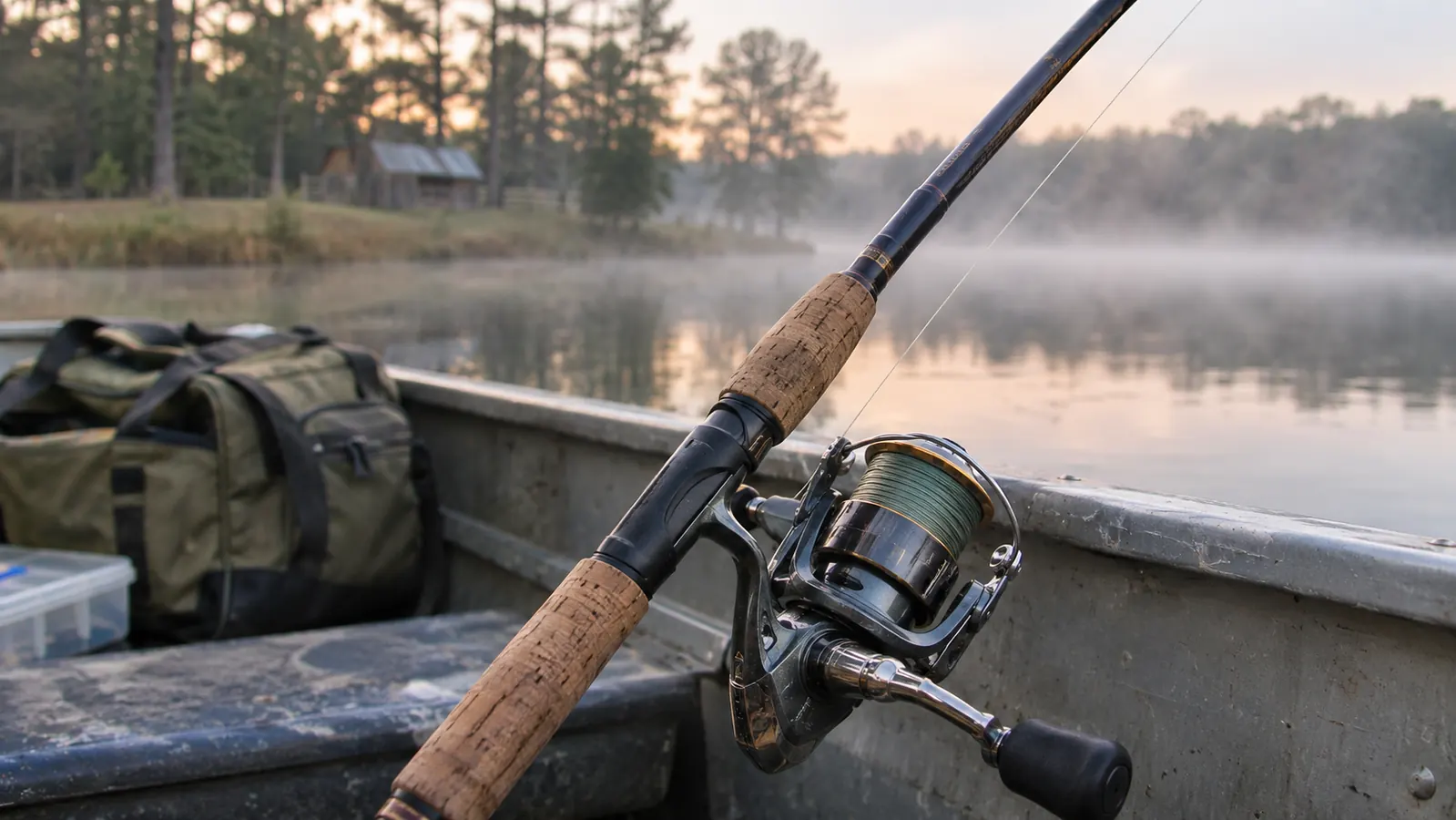
Pinch the line above the reel with your thumb and forefinger while you turn the handle. Or hand the spool to your fishing buddy and have him hold a pencil through the hole with his thumbs dragging on the flanges. Earl holds it for me on the good days and reminds me about it on the others. Either way, somebody or something needs to be putting a light, even drag on the line as it goes on.
You want firm tension, not a death grip. The line should go on tight enough that it does not cut down into itself under a load, but not so tight that you are stretching monofilament before it has seen a single cast. Firm and even is the feel you are after. On a cool morning the line will loosen slightly as the day warms up, so slightly firm beats slightly loose every time.
Crank slow. A steady, even pace lays the line down in neat parallel turns, and a fast, jerky one puts it on in a spiral that shows up later as a wind knot at the worst possible moment. Watch the line as it comes off the spool, and if you see it spiraling on the way to the first guide, stop and check the orientation again before you waste another fifty yards.
Step 5: Fill to the Right Level and Break It In
Stop when the line sits about a sixteenth of an inch below the lip of the spool. An overfilled spool throws loops and wind knots because the line has nowhere to go but off the front. An underfilled spool costs you casting distance and makes the drag work harder than it should. Look at the spool from the side rather than straight down at it, because the angle tells the truth and the top down view does not.
Tie on a plain swivel or an old hook with the point cut off, then walk 50 or 60 yards of line out across the yard. If you are on the water, let it trail behind the boat at idle for a minute or two. Reel it back in with tension between two fingers. This pulls the residual twist out of the spool, and it is the step most people skip on the way to the first cast of the day.
The first trip out, expect a little memory for the first fifteen minutes, especially if the morning is cool. It settles down once the line takes on water. After that first trip, strip the top 20 to 30 feet off and retie, because that stretch took all the abrasion from the guides, the bank and the fish. On six pound line it is cheap insurance and it takes about a minute.
Twenty turns tells you the truth. If the line jumps off in loose loops, the spool is upside down, and cranking harder only makes it worse.
What Else Helps
Soak the new spool in a bucket of warm tap water for ten or fifteen minutes before you spool the reel. Not hot water, just warm. It softens the memory in the monofilament and lets it lie down on the spool straighter. I do it in the garage while I am poking at the truck on a Saturday morning, and it makes a real difference on a cold day when monofilament wants to coil like a spring the second it comes off the spool.
Keep a bottle of line conditioner in the boat and put a little on the spool before the first cast. Monofilament picks up grit and pond scum, and a wipe down with a damp rag at the end of the trip keeps that mess out of the reel. A clean spool casts better and lasts longer than a dirty one, and it costs you about thirty seconds at the ramp before you pull the boat out.
Put a ball bearing swivel in front of anything that spins. Inline spinners and spoons twist line faster than anything else in the box, and a good swivel stops most of it at the source instead of letting it stack up on the spool. The other habit worth keeping is closing the bail with your hand instead of cranking it shut. Cranking it shut puts a twist in the line on every cast, and after a hundred casts you have a hundred twists.
Check the line roller on the bail arm while you are at it. A roller that has stopped turning, or one with a groove worn in it, will rough up six pound line in a hurry and it will feel like drag on the cast. It takes a minute to spin it with your finger. If it grinds, clean it and put a drop of oil on it before the next trip. That little roller does more work than any other part on a spinning reel.
Re-spool monofilament at least once a season, and more often if the reel lives in a hot truck. Sun and heat break down monofilament faster than fish do. I buy two spools of Berkley Trilene XL in the spring, one for the finesse reel and one to ride in the boat box, and I know exactly where both of them went by the time July rolls around. Do not leave a rod in the cab of the truck in July with the windows rolled up. That is the fastest way to ruin a fresh spool, and I learned it the expensive way a few summers back with a rod I had just filled.
One Spool, One Afternoon, and a Reel That Casts Straight Again
Berkley Trilene XL covers everything I fish for around Dothan, from bream on a cricket to bass on a Texas rig. The 6 pound, 330 yard spool is the one that lives in my boat box, and it carries a 4.6 star average across more than 3,700 ratings from anglers who have done the same thing.
Amazon Check Today's Price on Amazon →