

For a long stretch my whole hook-removal kit was a pair of needle-nose pliers from a hardware store in Dothan and a fingernail clipper I borrowed from the bathroom drawer and never gave back. It worked about like you would expect. Then this past spring I started carrying a pair of Piscifun fishing pliers in the side pocket of the jon boat, and I quit reaching for the needle-nose. Not because it is a fancy tool. Because it does in one wet hand what used to take two hands, a knee, and a fair amount of language my mother would not have approved of.
Here is the short answer before the long one. If you throw braid, if you fish out of a boat, and if your hands are usually wet and often somewhere you cannot see them, the Piscifun pliers are the better tool and it is not a close call. If you fish farm ponds from the bank with monofilament, carry a couple of spare hooks, and already own a decent pair of needle-nose pliers, you are not missing much and you can stop reading here. For everybody in between, the rest of this is the why, including the three jobs where the old needle-nose still whips it.
| Piscifun Fishing Pliers | Needle-Nose Pliers | |
|---|---|---|
| Opening a split ring | Dedicated split ring nose. A hook swap takes a few seconds and the ring comes out round. | No split ring feature. You pry with the tip and usually put a small bend in the ring. |
| Cutting braid | Tungsten carbide cutters, fully replaceable, sitting right where the line already is. | Pinch cutter tucked back by the joint, on the wrong side of the fish. |
| One-hand use | Spring loaded jaws stay open on their own, so one hand does the work. | Closed by default. You open them with your other hand every single time. |
| Reaching a deep hook | Built for grip and cutting. Not a probing tool. | Long slim jaws get behind a swallowed hook better than anything else I carry. |
| Bending a hook back | Aluminum handles. Fine for a light tweak, not for leverage. | Hardened steel jaws. You can lean on them and not worry. |
| Wet hands, wet deck | Ergonomic grips on aluminum, plus a nylon sheath that keeps the point out of your leg. | Smooth steel handles go slick, and mine started spotting rust by the second trip. |
| Weight on a belt all day | 3.6 ounces on the scale in my shop. | About the same on a short pair. A long pair rides heavier and the tip pokes you. |
| Already in your toolbox | You have to go get a second tool. | Probably already sitting in the bottom of the box. |
| Rinsing off after a day on the water | Sold as a saltwater tool with aluminum handles. Rinse it and hang it up. | Plain steel. Rinse it or replace it. |
How These Two Tools Ended Up in the Same Boat
The needle-nose came first. It has been in that boat since I bought the boat. I used it for everything: unhooking a largemouth, snipping a tag end, opening a split ring with the tip, bending a hook back after it hung in a stump. It did all of those jobs at about a C average, which for fifteen years was good enough for me. The Piscifun pliers showed up because I got tired of pinching braid between my teeth on a windy afternoon on Eufaula. That is the honest origin story. No research, no forum thread, no grand plan. Just cold hands and a bad attitude.
That first trip was a Saturday in early April on the north end of Eufaula, water still cool enough that I wore a jacket until nine. Wind out of the northwest around twelve, which on a fourteen-foot aluminum boat is enough to keep you busy with the trolling motor. I was throwing a spinnerbait on thirty-pound braid, and the buck brush up that arm of the lake eats a spinnerbait about every third cast. Every hang meant a retie, and every retie meant pinching that braid off with my teeth, because the cutter on the needle-nose sits back against the joint and I could not get the line into it with one hand while the other hand held the rod. I did that four times before noon. By the fourth time I had made up my mind.
What I did was carry both for a full season and make myself use the new tool first. Every hook swap, every retie, every fish that swallowed a worm. I cut 30-pound braid with the carbide cutters. I opened split rings with the nose. I unhooked crappie, bream, a couple of channel cats, and one bass that had inhaled a Texas rig in a way that made me feel bad about myself. I dropped both tools on the aluminum deck, in the creek mud, and once in about a foot of water while reaching for a fish. Then I rinsed them, dried them on my shirttail, and put them back in the box.
Earl, my brother-in-law, fished with me most of those Saturdays and he ran the needle-nose the whole time, so I had a control group sitting eight inches away. Earl's pair was already spotting rust across the joint by the second Saturday, and he kept right on using it, because a tool that is already ruined is a tool you do not mind loaning out. That is not a lab test. It is a fair comparison between two tools doing the same work on the same water in the same wind. What follows is what the season actually showed, including the parts that did not flatter the new tool.
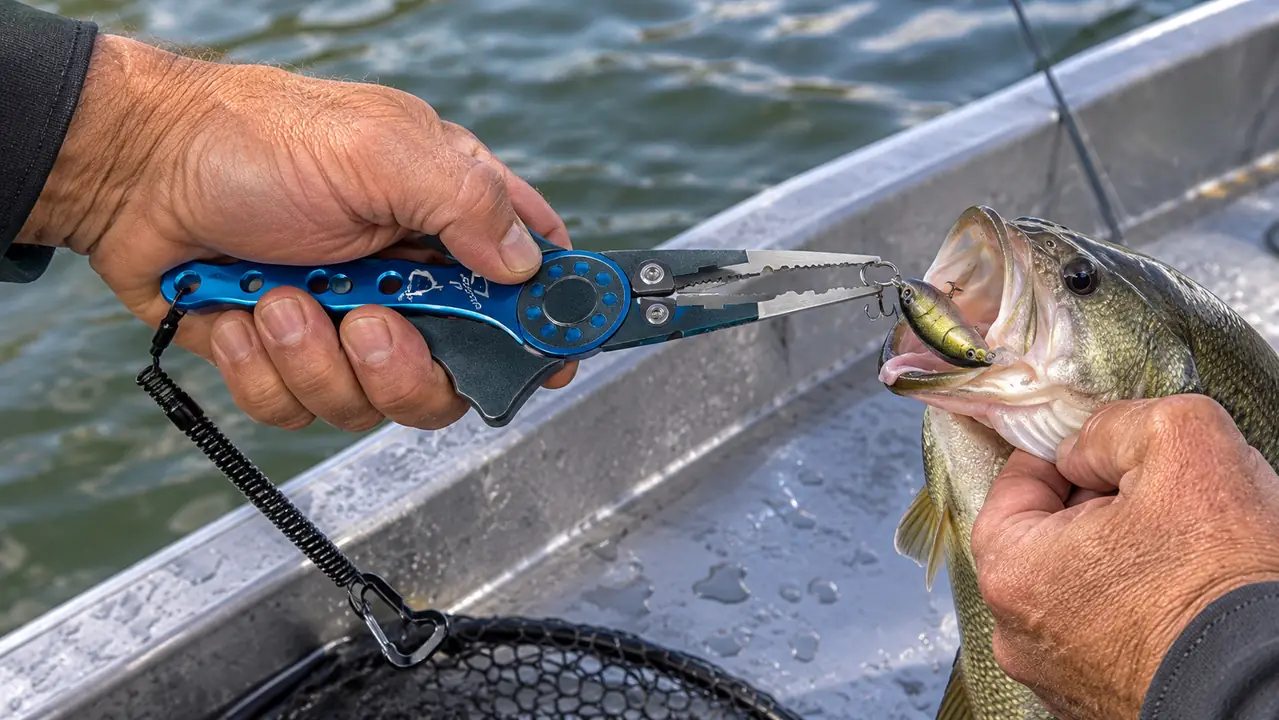
The spring is the part I did not know I needed. The jaws stay open between fish, so one wet hand does the work that used to take two.
Where Piscifun Wins
The cutters. Tungsten carbide, and they are fully replaceable, which matters more than it sounds. Braid does not cut like mono. Mono pinches and pops. Braid has to be sheared clean or it frays and the knot fails later, usually on the fish of the day, usually right at the net. The needle-nose has a pinch cutter tucked back by the joint, and to use it you feed the line into a spot you cannot see while a fish is flopping on the deck. The Piscifun cutters sit right where the line already is. In a season of reties I did not have one knot fail that I could blame on the cut.
I counted it one Saturday in May, mostly out of curiosity. Thirty-one hook changes and reties between first light and two in the afternoon, swapping a Texas rig for a shaky head and back again every time the fish changed their mind. With the needle-nose, every one of those cost me a second hand and a rod set down on a moving deck. With the spring loaded jaws I hooked the split ring, rolled it back, slid the old hook off, slid the new one on, and let the ring close, all with the rod tucked under my arm. Thirty-one times in one morning. The split ring nose is the part I did not expect to care about. It holds the ring open instead of prying at it, so the ring goes back round instead of going back with a small bend in it that a good fish will find later.
The spring loaded jaws. This is the thing I would not have guessed at, and it is the reason the tool earned a permanent spot. A pair of needle-nose pliers is closed by default, so every single time you use them you open them first, usually with your other hand, usually while that other hand is holding a fish. The Piscifun stays open on its own and closes only when you squeeze. Small design choice. Changes how the tool feels by about the twentieth fish of the morning. Same story with the split ring nose. I used to fight a split ring with the tip of a needle-nose and put a bend in the ring for my trouble. Now a hook swap is a few seconds of work.
Where Needle-Nose Pliers Win
Reach and leverage, and this is not close in the other direction. A long slim needle-nose can get behind a hook that is down in a bass's throat in a way the fishing pliers cannot, because the pliers are built for grip and cutting, not for probing. When a fish is hooked deep and I am trying not to do damage, the needle-nose is what comes out of the box. And when a hook is hung in a laydown and I have to lean on it, hardened steel jaws take a load that I would not put on aluminum handles. That is the trade. The nicer tool is the more careful tool.
The case for it turned up in late April on Seminole. A bass took a Senko and swallowed it, and the hook was behind the tongue, where I could see it and could not reach it with anything short and blunt. The Piscifun nose is built for grip and for cutting and it is not built for going down a throat. The needle-nose is long and slim and got there in one pass. That fish was back in the water inside a minute and it left hard enough to soak my shirt. That is the whole reason the old tool still lives in the boat, and it is the one job I would not want to be without it for.
Bending hooks back. I straighten a hook most trips, and I have leaned on the needle-nose to close a point gap after a snag in a way I would not ask of a better tool. There is also a plain, unglamorous advantage. The needle-nose is already in the toolbox, and it is the tool I do not mind abusing. I dropped it over the side once in about a foot of water while reaching for a fish, fished it out with the net, and kept right on using it that same morning. If it had gone to the bottom for good, I would have shrugged and driven to the hardware store. Nobody stands in the driveway mourning a needle-nose. That is not nothing. It is exactly why one still lives in the boat.
The Tool I Reach For With One Wet Hand and a Fish On
Aluminum handles, spring loaded jaws that stay open, tungsten carbide cutters you can replace, 3.6 ounces in a nylon sheath. It has ridden in the side pocket of the jon boat for a season and I have not found a reason to take it out. Check today's price on Amazon and see whether it fits the way you fish.
Amazon Check Today's Price on Amazon →What I Liked
- Carbide cutters shear braid clean, and the cutters are replaceable
- Spring keeps the jaws open so one hand can do the work
- Split ring nose turns a hook swap into a few seconds
- Aluminum handles at 3.6 ounces ride light on a belt
- Nylon sheath keeps the point out of your leg
Where It Falls Short
- Not a probing tool. A deep hook still calls for needle-nose
- Aluminum will not take the leverage of hardened steel jaws
- It is a tool you keep track of, unlike the hardware store pair
The Part Neither Tool Fixes
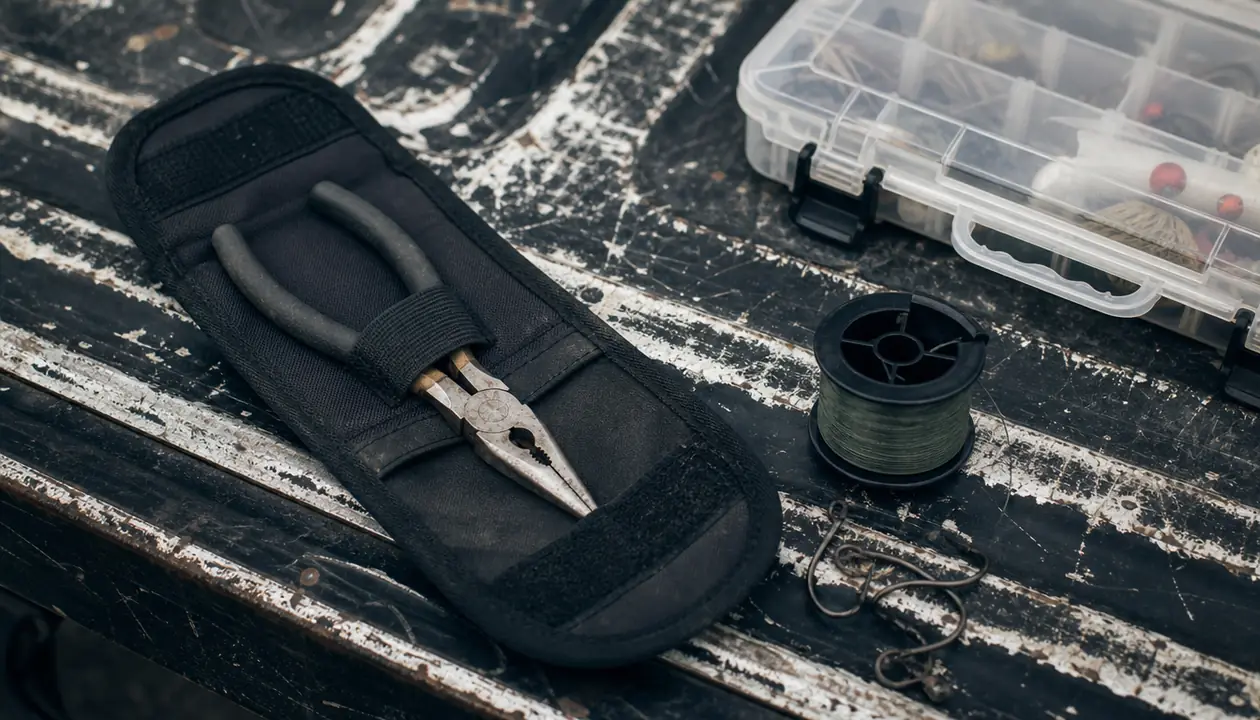
Neither one makes you better at unhooking a fish. A hook set deep in the gullet is a job for a cut line and a pair of forceps, not for any pliers on the shelf. Neither tool stops rust if you put it away wet, though the aluminum handles on the Piscifun have held up better than the plain steel on my old pair, which started spotting after a couple of trips in the rain. And neither one will find itself after you set it down on the deck and a wake rolls the boat. I have looked for both of them in the same bilge water, and I did not enjoy it either time.
What I will say for the Piscifun is that it comes back from a wet day looking like it did the trip before. I rinse it in the driveway, shake it out, and hang the sheath on a nail by the shop door, and after a season of that it has not spotted or stiffened up. The needle-nose gets the same treatment and looks like it has been through a war, because it has. That difference is worth about thirty seconds of my evening and I have decided I do not mind spending it.
Who Should Buy Which
Buy the Piscifun pliers if you throw braid, if you fish from a boat, and if you swap hooks or lures more than once an outing. The one-handed operation is the whole case. On a rocking deck with a fish in one hand and slick aluminum underfoot, the tool that stays open by itself is the tool you actually use. The nylon sheath matters more than I expected too, since the point stays where I put it instead of rolling around loose in a pocket. It is also the better pick if you get to the coast once or twice a year and want something that rinses off instead of rusting in the truck bed between trips.
Keep the needle-nose, or go buy one, if you fish ponds from the bank, if you fish mono, and if your hook work is mostly unhooking bream and straightening a hook after a snag. If you are buying one tool and only one, and you throw braid from a boat, buy the Piscifun. If you are buying one tool and only one and you fish mono from the bank, the needle-nose will do every job you have. Buy both, honestly, if you are in the boat as much as I am. The needle-nose is the tool for the ugly job. The Piscifun is the tool for the hundred small jobs that make up a day. I carry both. I just reach for one of them about ten times more often than the other.
Carry Both. Reach for the One That Stays Open.
The needle-nose is not going anywhere, and it still earns its spot for a deep hook and a bent one. But for cutting braid, swapping a hook, and doing it with one wet hand on a moving deck, the Piscifun fishing pliers are the pair that comes out of the sheath first.
Amazon Check Today's Price on Amazon →