

The first bass I ever caught on a plastic worm was maybe a pound and a half, sitting on the edge of a grass line on a farm pond outside Dothan. I caught it because an old man at the ramp told me to quit reeling and just let the thing fall. That was a long time ago. I still rig a worm the way he showed me and it still works, and what has changed is how much people complicate it. I have stood at the ramp and listened to two grown men argue hook sizes for twenty minutes while the light went off the water. The bass do not care about the argument. They care about how that worm falls.
A Berkley Power Worm is what I reach for, the 7 inch ribbon tail, and I buy the 13 count pack because I lose a fair number of them in the buck brush and I do not want to be home sorting a box when the fish are up. It is a soft plastic worm with a curly ribbon tail, and the PowerBait scent is built into the plastic. The package claims that scent keeps a bass holding on about 18 times longer than a plain worm. I cannot prove 18 times with a stopwatch, but I have had fish hold one long enough for me to take up slack twice before I ever set the hook. That is not nothing.
Start with a worm that fish do not spit out on the first tick
Seven inches, ribbon tail, PowerBait scent cooked into the plastic, 13 to a pack. It is the one soft bait I keep in three places: the boat box, the truck console, and the bag I carry when I am walking the bank.
Amazon Check Today's Price on Amazon →Step 1: Match the Hook to the Worm and the Cover
A 7 inch worm needs a hook with a wide enough gap that the plastic can fold out of the way when a bass closes its mouth. I fish a 4/0 offset worm hook most days and step up to a 5/0 when I am working the thick part of a grass line. Go smaller than a 3/0 and you are bunching a 7 inch worm up on the shank, which kills the tail. The tail is the whole point. I learned that on a pond off the Geneva County line one April, when a 3/0 was all the bait shop had left and I fished it anyway because I had driven out there. I caught one skinny buck bass all morning, and the front half of the worm was balled up on the shank when I got it back. Went the next Saturday with a 4/0 and caught five off the same stretch of bank.
The point matters more than the label on the hook package. Berkley is selling you the worm, not a matching hook, so I am not going to pretend there is one you have to buy. Any decent offset hook with a sharp needle point will do the job. Drag the point across your thumbnail before you tie it on. If it slides instead of digging in, it goes in the discard pocket, because a dull hook on a Texas rig turns a good bite into a soft swell you feel and nothing else.
Match the wire to the cover too. A light wire hook gives a worm better action in open water and sets easier on a long cast, but a big bass back in the buck brush will straighten one out on you. I keep two packs in the boat box, light wire for open water and heavy wire for grass and laydowns. Swapping takes ten seconds and it saves the fish of the day.
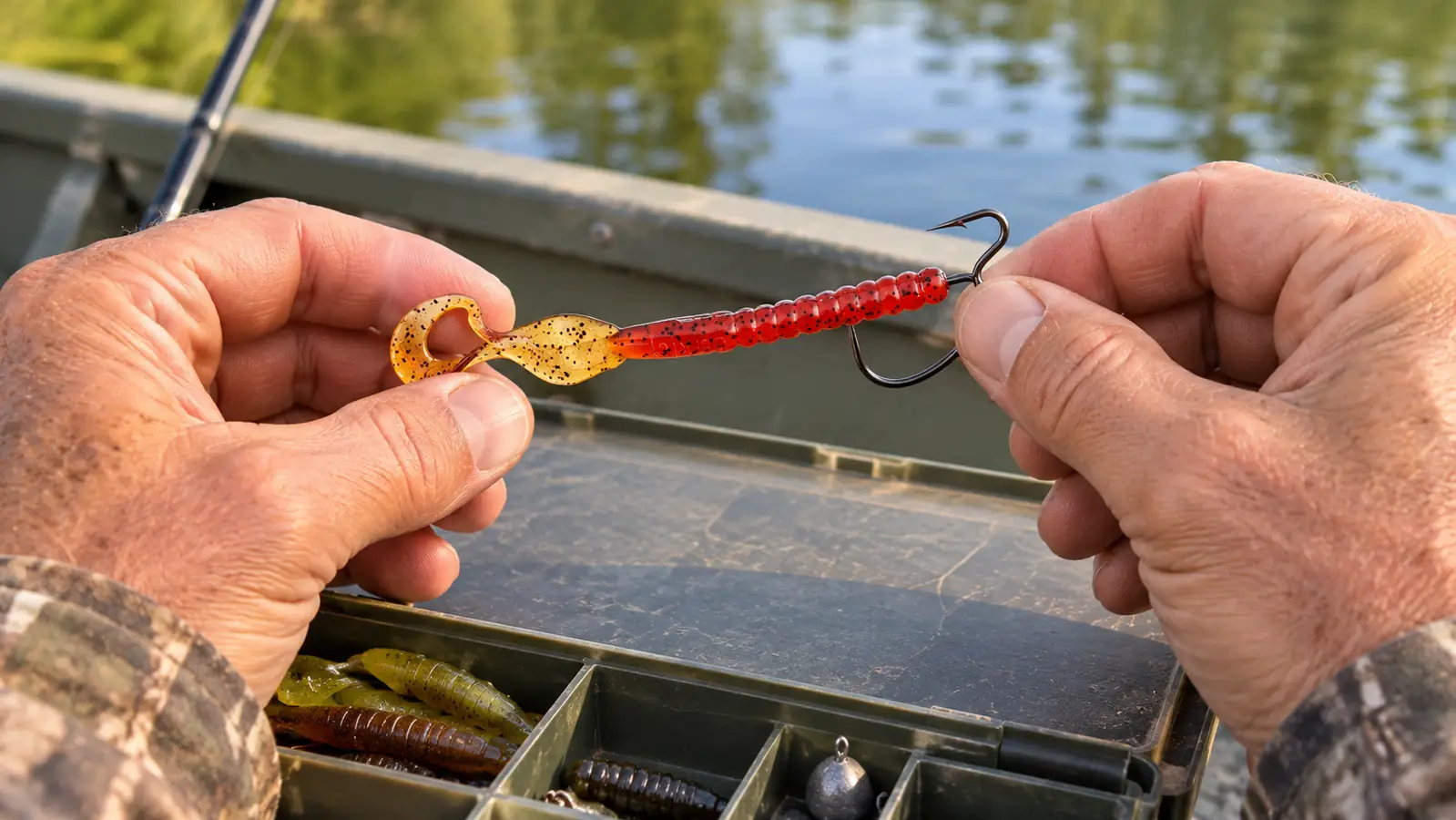
Step 2: Thread It Nose First and Keep It Straight
Tie the hook on first, then hold the hook against the worm with the eye at the nose so you can see where the point needs to come out. Push the hook point into the center of the worm's nose about a quarter inch, run it down the body, and bring it out the side. Slide the worm up the line until the nose sits against the hook eye.
Now roll the worm around the bend of the hook and line the hook shank up along the back of the worm. Run the point back into the body, right through the middle, and bring it out the far side so the point rides just barely exposed. If the point is buried in the plastic you will miss fish. If it hangs out too far you will snag every stick in the pond. Just barely poking through is the target.
Hold the finished rig up and look at it from the side. The worm should hang straight, no kink, no twist, tail pointing down. A worm that is crooked will spin on the fall and twist your line into a spring, and you will spend the next cast picking it out instead of fishing. If it looks off, back the hook out and start over. It is faster than fixing a backlash. I rig Berkley Power Worms more than anything else in the box and I still get one crooked out of most packs, usually the last worm in the bag that sat bent against the plastic all summer. Straighten it, hold it against the hook again, and redo it.
Step 3: Pick the Weight, or Better Yet Skip It
A weightless Texas rig is the most useful thing in a pond and the least used. With no weight the worm falls slow and flat, tail turning the whole way down, and it stays in the strike zone through that long fall. In water six feet or less, which is most of what I fish from the bank, weightless is where I start. It also skips better under overhanging limbs, which is where pond bass like to sit.
When the wind picks up or I want to get down a ledge off the dam, I go to a 1/8 ounce bullet weight, then 1/4, and 3/8 if I am punching through duckweed or matted grass. Peg it. A bullet weight that slides up the line on the cast separates from the worm and tangles the whole thing into a bird nest, and a pegged weight keeps the worm and weight moving as one piece through cover. I use one of those little rubber bait stoppers, the cone kind, and slide it down tight against the weight. Last October the wind came up out of the north on Eufaula and I fished weightless for forty minutes without feeling bottom once. Went to a 1/4 ounce and put three fish off the same rocky point in the next hour.
Keep the weight as light as the conditions allow. Overweight a worm and it falls fast and straight, and pond bass that are not actively chasing will not follow it down. If you are unsure, drop a size and slow everything down. You will lose a few more rigs to snags and you will catch more fish, and I have made that trade every season for years.

Step 4: Cast Past the Spot and Count the Fall
Cast beyond your target, not at it. Land the worm three or four feet past the stump or the edge of the grass and bring it in quiet. A bait that splashes down on a bass's head in two feet of water will spook him every time, and pond fish get educated fast because the same handful of people fish them all year.
As soon as the worm hits, strip a couple of feet of line off the reel and hold the rod at about ten o'clock. Watch the line where it meets the water, not the worm. Count the fall in your head. Most bites on a worm come on the way down, before you have moved it once, and a bass that takes it on the fall is usually running off with it by the time you notice. I count it off slow, one Mississippi at a time, and if the worm has not ticked anything by eight I know I am either in the wrong depth or dragging it over bare mud where nothing lives.
The line will tell you. Sometimes it ticks sideways. Sometimes you feel a tap tap and then nothing, and the worm feels like it got heavier or lighter than it was a second ago. Either one, reel down until the line comes tight and swing. Do not swing at a slack line, because all you will do is pull the worm out of his mouth and sling it into the bushes behind you.
Step 5: Work It Back Slow and Let the Tail Do the Work
Here is where most people lose the fish they already found. A ribbon tail worm moves at speeds where a straight tail bait just plows water. Lift the rod tip from ten o'clock to about eleven, drop it back down while you take up the slack, do that twice, then drag the worm a foot along the bottom and stop. Let it sit. Count to five. Then two short hops, just enough to knock the tail around and lift a little mud, and let it settle again. On a calm evening you can watch the line jump when a fish picks it up off the bottom.
The pause is what catches them. A bass follows that worm down, gets behind it, and waits for it to do something. If you never stop moving it, he will follow it all the way to the boat and turn off. If you stop, he picks it up. My brother-in-law Earl had to watch me do this for two seasons before he believed it, and now he out-fishes me on a cold front with it.
When the bite comes on the pause, do not set the hook on the first tap. Wait until the line moves off to one side or you feel real weight on the rod. Then reel down, lean into it, and keep the rod tip low so the fish cannot jump the hook out. On a long cast, that hook set is mostly you taking up line. Get the slack out before you swing and more of them will stay pinned.
What Else Helps
The rig above will catch fish from the bank tomorrow, but a few small things make it better. A wacky rig, with the hook run through the middle of the worm and a small O-ring holding it, gives a slower flutter and it is deadly on pressured pond fish in the spring. Trim half an inch off the tail if the fish are short-striking and only grabbing the back end. And keep the worms out of the sun in a soft bait binder or the original pack, because that plastic is soft by design and a summer afternoon in an open box will weld them into one lump.
Fish it on the line you already have. I run braid with a short leader on the jon boat and straight monofilament when I am walking the bank, and either one works if you keep an eye on it for nicks after every fish. Expect three or four fish out of a Berkley Power Worm before the nose tears through and it starts sliding down the hook; when it does, bite off the torn quarter inch and re-rig it, and you get a few more. Carry a hook sharpener, carry more worms than you think you need, and keep a dry rag in your pocket for your hands. Salt and pond water and a phone screen do not mix.
Nine out of ten pond bass I catch on a worm take it on the fall, before I have moved it once. The worm does the work. My job is to stop pulling it away from them.
The worm that holds on long enough for you to set the hook
A soft plastic worm with a curly ribbon tail and PowerBait scent built in, 7 inches and 13 to a pack. Match it to a 4/0 offset hook, peg a 1/8 ounce weight if you need one, and fish it slower than feels natural.
Amazon Check Today's Price on Amazon →