
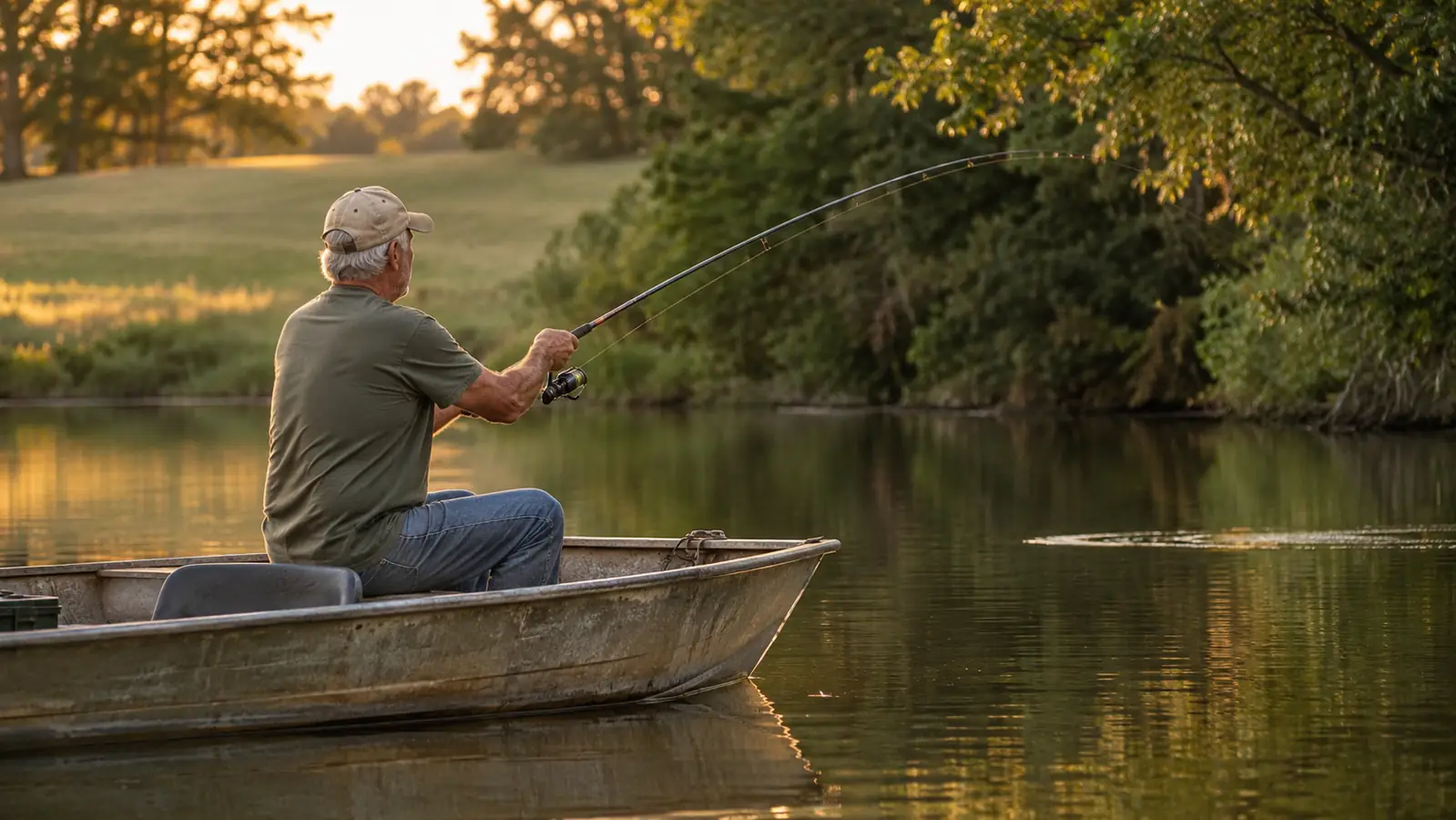
The first bass I caught on a Berkley Power Worm came off a farm pond outside Dothan on a hot evening in early June, and it was not a fish worth bragging about. Maybe a pound and a half, with a belly on it. But it ate that worm like it had not been fed in a week, and it stayed hooked long enough for me to get a thumb in its mouth. Before that I had thrown a plain ribbon-tail bait down the same bank for two hours and gotten nothing but a couple of taps that came and went. That is the whole story of scent in a soft plastic, and I did not need a lab report to understand it.
I ran this bait from June into early October. Off the bank on the ponds after work, out of the fourteen-foot jon boat on weekends, and on two trips over to Eufaula when the water was up in the buckbrush. My brother-in-law Earl fished it some too, mostly because he ran out of his own worms and got tired of me not offering. Somewhere north of a hundred fish came over the side on this bait in that stretch, mostly largemouth, with a few crappie that had no business trying to eat something seven inches long. Tater slept through most of it and woke up for the ride home.
The Quick Verdict
A soft plastic that gets eaten and stays eaten. On pressured ponds where fish short-strike plain worms, that alone earns the space in the box. Cold water and heavy cover are a different conversation.
Amazon Check Today's Price →The worm that turns a tap into a bite
Seven inches, ribbon tail, PowerBait coating. Thirteen to a bag, and the bag rides in a boat box all summer without going brittle. Check today's price before the fall feed starts.
Amazon Check Today's Price on Amazon →How I've Used It
My default rig is about as plain as it gets. A 3/0 offset worm hook, a 1/8 ounce bullet weight pegged tight to the nose, and 12 pound mono on a medium-heavy spinning rod. I throw it at laydowns, at the outside edge of the grass, at the shade line under a cypress, and I let it fall on a semi-slack line. Most of my bites come on the fall, and if you are not watching the line you will not see them. The worm is seven inches and it has some body to it, so it falls at a decent clip even with no weight at all. That matters when fish are sitting a foot off the bottom and will not chase anything.
Water temperatures ran from around 78 in June up to 88 in August and back down into the low 70s by October. Farm ponds get hot and sour by midsummer, and the fish get particular about how long they will hold onto anything. That is where the PowerBait coating earns its keep, at least in my boat. I had afternoons where I would get four or five taps on a plain worm and nothing to show for it, tie on the Berkley, and start hooking fish on the same bank inside of twenty minutes. Not every time. Enough times that I quit being stubborn about it.
I also fished it weightless in the creek near the house, Texas rigged with no sinker, just letting the worm tumble with the current and dart when I popped the rod tip. That is how I would fish it if somebody told me I could only have one pond and one bait for a whole summer. It is slow fishing in the sense that you are not covering ground, but it is the kind of slow that produces on days when the water is flat and the fish have gone dull about anything moving fast.
One side note on bycatch. A seven-inch worm is a big meal, and I caught more crappie on it than I expected, usually when it was falling through a brush pile on Seminole. Bream will peck at the tail and not get hooked, which is annoying and also tells you where the bait is sitting. If you want to avoid the pecking, trim nothing and just move. It is not a bait for a light bite day with small fish.
What the PowerBait Formula Actually Does
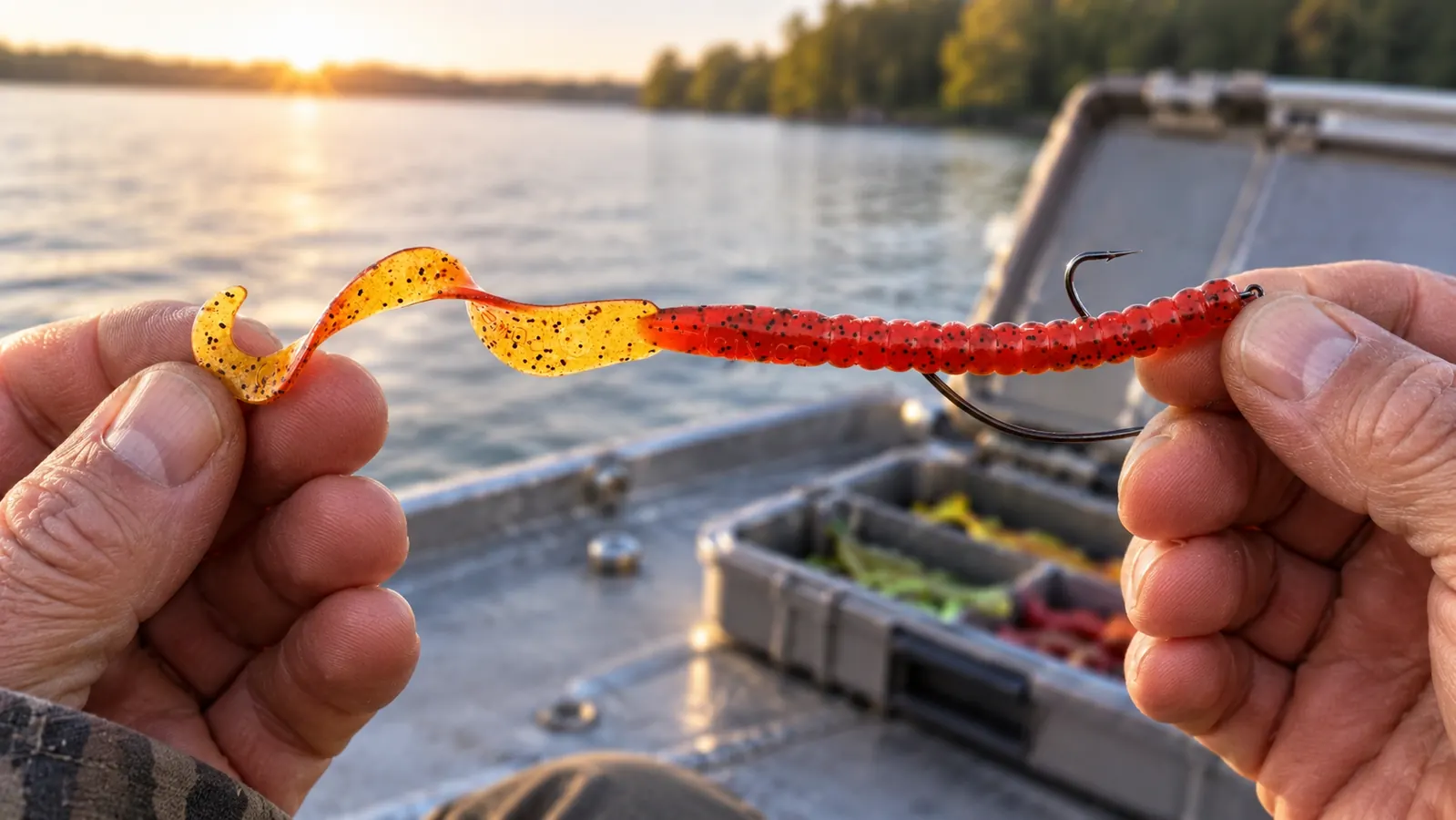
Berkley says the PowerBait formula increases bite retention by eighteen times, which is the kind of number that sounds like it came out of a marketing meeting. I cannot verify eighteen times. I have no way to measure a half second of hold time with a stopwatch while a fish is swimming off with my bait. What I can tell you is that on a pond that gets fished hard, a bass will pick up a plain plastic worm, feel the plastic, and let go. Give it something that tastes like something and it hangs on longer. Sometimes that difference is barely perceptible. A barely perceptible difference is the difference between a hookset and a story about the one that got off.
The tail is a long ribbon, curly and tapering, and it does what a ribbon tail is supposed to do. It wobbles and swims at the slowest retrieve you can stand. I watched it in clear pond water off the edge of a dock more than once, and at a crawl it still moves. That tells you what this bait is for. It is not a bait for covering water. It is a bait for putting in front of a fish you believe is there and letting it sit until the fish makes up its mind.
One thing to know going in. The scent is real and it gets on your hands. I have wiped my palms on my jeans more times than I can count and then eaten a sandwich, and I regret both. Wash up before lunch. It also gets into the plastic of a tackle box, and after a couple of months every bait in that tray smells like it. I have not decided whether that is a problem or a bonus.
Give a bass something that tastes like something and it hangs on longer. Sometimes that difference is barely perceptible, and barely perceptible is the difference between a hookset and a story about the one that got off.
How It Compares to a Plain Worm and to Live Bait
A plain ribbon tail costs less and catches fish. I am not going to sit here and tell you otherwise, because it would be a lie and you would find out the first afternoon. Where the Berkley version separates itself is on the second and third cast to the same piece of cover. A fish that has been caught once or twice on a plain worm is a different animal. It will nip the tail and let go. The coating gives it a reason to hold on one more beat, and that beat is the thing you are paying for.
Against a live nightcrawler, the argument changes. Live bait out-fishes plastic on raw numbers most days, especially for volume of small fish, and it is not close for catfish and bream. But live bait means a cup of dirt in the boat, bait that cooks in the heat by two in the afternoon, and a hook that comes back bare more often than not. I can leave a bag of these in the console for a month and they are ready when I am. At six in the evening on a Tuesday, after I have closed up the shop, that convenience is worth more to me than a live bait advantage I do not have time to use.
Against a stick bait or a creature bait, the worm wins on slow and loses on speed. If the fish want something moving, throw something moving and do not fight it. If they want something that sits and wiggles and smells like food, this is the bait. Reading that correctly is most of the job.
Rigging Notes and What Wasted My Time
A Texas rig with a pegged 1/8 ounce weight is the workhorse, and I never found a reason to move off it for long. I did try a 1/4 ounce when the wind was up and I needed to feel bottom, and it worked, but it killed the fall, and the fall is where my bites live. If I need to get down faster, I would rather reposition the boat than add lead. That is slower and it works better.
The wacky rig was a bust for me on this bait. Hook through the middle of the worm, and it is too long and too stiff in the center to fold the way a finesse worm does. I missed more fish than I hooked across two trips and went back to Texas rigging. Your mileage may differ, and if you already catch them wacky style, try it once before you take my word. I gave it a fair shot and it did not pay.
What did work, and surprised me, was a slow drag on the bottom in the last hour of light. Drag it six inches, stop, drag it six inches. That is boring fishing and I do not enjoy it, but in late August the fish in the pond near my shop would eat it when they would not take anything that moved. My biggest pond fish of the whole summer came on that retrieve, right at dark, on a worm that had already caught four fish and had a chewed-up tail. That is not a coincidence. It is a bait doing what it was designed to do.
The other thing I wasted an evening on was a shaky head. Same story as the wacky rig. The tail is long, the body is bulky, and the worm wants to fall flat and swing instead of standing up. A finesse worm on a shaky head is a real tool. This is not that tool, and pretending otherwise cost me a trip.

Where It Falls Short
The tail tears. Not right away, but by the third or fourth fish on a bait you will see the ribbon start to split and thin out. Once the tail goes, the action changes and the fish lose interest in it. I get three to five fish out of a worm before I retire it to the trash. That is acceptable when you have thirteen in the bag, but it is not the same as a bait you can fish all day on one hook.
It is soft, and soft means it slides down the hook shank. After a couple of fish the worm has worked up toward the eye and you have to reset it. That is true of nearly every soft plastic ever poured, so I am not going to pretend it is a defect, but it is a thing you will be doing with wet hands in the dark, and you should know it going in.
And it is not a bait for heavy cover. Punching mats, thick grass, anywhere you need to crash through and get bit on the drop, this worm is too soft and too slow. I lost fish in the pads on Eufaula because I could not move them out of the stems fast enough on the gear I was throwing. Some of that is me. But I would not pick this bait for that job, and I would not let anybody talk me into it again.
What I Liked
- Holds fish long enough to set the hook on pressured ponds
- Ribbon tail swims at a crawl, which is what a hot, high-pressure pond asks for
- Seven inches of body rigs clean on a 3/0 without crowding the hook point
- Thirteen to a bag means a torn tail is not a lost afternoon
- Fishes well from the bank, from a jon boat, and in moving water
Where It Falls Short
- The tail splits after three or four fish
- Too soft and too slow for punching grass or working pads
- Scent gets on your hands and stays in the tackle box
- Wacky rig and shaky head both fished poorly for me
- Not a search bait, so you will not cover water with it
How It Holds Up in a Boat Box
I keep the bag in a Plano 3700 with the rest of my worms, and the factory bag stays sealed. Left out in the sun on the deck of the jon boat for an afternoon, they go soft and greasy. Left in the truck bed in July they will weld themselves into one lump and you will peel them apart like a biscuit. I learned that the hard way and now they ride in the console where it stays reasonably cool.
Stored properly they last a long time. I had a bag I opened in June with four worms left in it in October, and those four still fished fine. The plastic does not dry out and go brittle the way some cheaper worms do after a few weeks in the heat. I cannot explain the chemistry of it and I am not going to try. I can tell you what the bag looks like after five months in an Alabama truck, and it looks fine.
You get thirteen to a bag, and I landed about forty fish on my first bag before I was down to tails and stubs and had to open the second one. That math works for how I fish. If you are on the water every weekend and you burn through soft plastics, buy two bags and save yourself a trip to town.
Who This Is For
Bank and boat anglers fishing pressured water for largemouth, mostly. If your pond gets hit every weekend and the fish have seen every trick worm and stick bait in the county, a scented ribbon tail fished slow is a real answer and not a theory. It is also a forgiving bait for somebody learning to fish a Texas rig, because it does not demand perfect feel or a fast hookset. And if you fish farm ponds in the summer when the water is 85 degrees and the fish are sulking under the shade, this is the bait I would put in your hand before I put anything else there.
Who Should Skip It
If you fish heavy grass or pads, or you punch mats, skip it. It is too soft, too slow, and you will spend the afternoon re-rigging instead of fishing. If you like to cover water with a moving bait and find fish that way, this is not that bait and it never will be. And if your water is in the fifties or colder, a ribbon tail will still catch a fish now and then, but a finesse worm or a jerkbait will catch more. Leave this in the box until the water warms up and the fish get stupid again.
Thirteen worms, one bag, and a summer of short strikes fixed
Seven-inch ribbon tail with the PowerBait coating. Texas rig it, slow down, and watch your line on the fall. Thirteen to a bag, and the tail tears before the plastic does.
Amazon Check Today's Price on Amazon →