

I bought my first pack of Berkley Power Worms because a man at the ramp on Eufaula told me I was fishing wrong. Not that my worm was the wrong color. Not that I was in the wrong creek. That I was fishing wrong, full stop. He handed me a pack out of his console, told me to slow down and quit jerking it every two seconds, and went back to trimming his motor. That was four seasons ago. I have bought a good many packs since then, and I have thrown a couple in the trash too. This is the honest version, the one that includes the trash.
Here is the short of it. The Power Worm is a 7-inch ribbon-tail plastic worm, 13 to a pack, and it catches fish in warm water when you fish it slow. It also tears up faster than a plain plastic worm, it will twist your line all morning if you rig it with a kink in it, and a worm fresh out of the pack is stiff enough that it takes a few casts to loosen up. Those are the misses. The hits are bigger, which is why I keep buying them.
The Quick Verdict
A slow-water worm that earns its keep in warm ponds and river backwater, as long as you rig it straight and buy more packs than you think you need.
Amazon Check Today's Price →13 worms, 7 inches, and a tail that works at a crawl
The pack that lives in my boat from April through October. Worth a look at the current price before your next pond trip, and worth checking the count so you order enough.
Amazon Check Today's Price on Amazon →What Nobody Tells You Before You Buy
The first thing nobody mentions is the smell. The PowerBait formulation has a scent to it and it does not wash off your hands. It is not a bad smell, exactly. It is a persistent one. I have eaten a sandwich on the bank and caught a hint of it on my fingers and I will not pretend I minded, but you ought to know what you are getting into before you open the pack in the truck.
The second thing is that 13 worms is not as generous as it sounds. You will lose worms. Not because they are fragile, though they are softer than a plain plastic, but because a 7-inch worm gets thrown into cover and cover eats tackle. On a bad morning working laydowns I will lose three or four and not think much of it. If you are the sort who counts his baits and gets sour about it, order two packs and save yourself the aggravation.
The third thing is that everything about this bait is built for slow water. The ribbon tail moves at the slowest crawl you can stand and still call it fishing. It is not a worm you burn across the surface hoping something chases it down. If you fish fast, you are paying for action you never see, and you will walk away thinking the worm is overrated. It is not overrated. It is just slower than you are.
How I Have Actually Fished Them
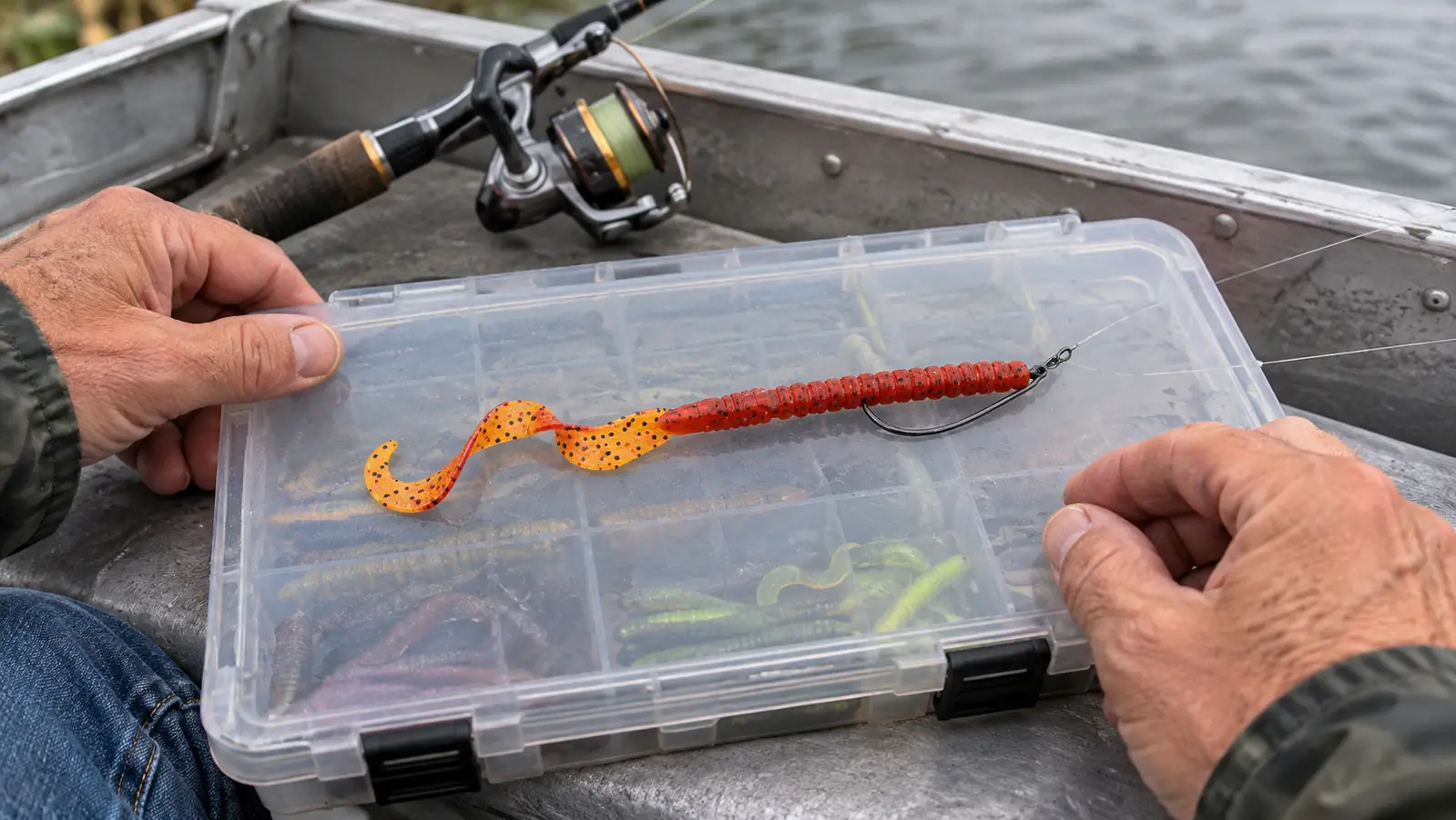
Most of my fishing is from the bank or out of a 14-foot aluminum jon boat with a small trolling motor, on farm ponds and on Eufaula and Seminole once the water warms. Nine times out of ten I fish a Texas rig, an offset hook sized to whatever cover I am in, and a bullet weight I can slide up the line when I want the worm to fall faster than the fish are willing to follow.
The pattern that produces for me is not complicated and I will not dress it up. Cast past the piece of cover you are aiming at. Let the worm fall on a semi-tight line and watch the line instead of the water, because the water will lie to you. Then lift the rod tip about a foot and let it fall again. Most of my bites come on that fall, right after the lift. If the line ticks, or slides sideways, or just looks wrong, I reel down and set.
I will give you a specific morning so you know what I mean. Early May, a pond off the county road, water still a little cool and a north wind pushing down the length of it. I had been catching fish on a spinnerbait and figured I would keep moving, so I tied on the worm and reeled it back like it was a crankbait, fast and steady, for about forty minutes. Nothing. Not a bump. I sat down on the tailgate, ate half a biscuit, and rerigged. Same worm, same spot, thrown out and let fall on a semi-tight line. First cast after the biscuit produced a fish. Nothing about the bait changed except my patience.
I am not going to tell you which color to throw. Everybody has an opinion and none of them survive a week of muddy pond water. I fish darker baits in dirty water and lighter ones when it clears up, and I could not prove to you that the color matters half as much as the speed does. If you want a color argument you can find one at any ramp in the county.
What does matter is keeping the worm straight on the hook. A ribbon tail rigged with a kink in it will spin, and a spinning worm will twist your line into a bird nest, and then you are sitting on the bank picking at your reel instead of fishing. I check mine every few casts, slide them back up the shank, and rerig once the nose gets chewed through.
The PowerBait Formula: What It Does and What It Does Not
Berkley's pitch is the PowerBait formulation, and the claim on the package is about bite retention. The idea is that a fish which picks the bait up holds it longer than it would hold a plain piece of plastic. I cannot measure that on a farm pond and I am not going to pretend I can. What I can tell you is that I get fewer of those one-thump-and-gone strikes on this worm, and more fish that come back and hit it a second time after they have had a taste.
What the scent does not do is make a fish eat something that is presented badly. I have fished this worm wrong, dragging it fast through water that was too cold, and I caught nothing, which is exactly what I deserved. Scent is not a substitute for putting the bait where a fish actually lives.
I ran a sloppy version of that comparison one summer, more to satisfy myself than to prove anything to anybody. Same pond, same stretch of bank, two rods in the holders. One rigged with a Berkley Power Worm, one with a plain plastic worm of about the same length and a tail that looked close enough. I alternated casts for two hours and kept a tally on the lid of my box. The plain worm caught fish. The Power Worm caught more of them, and the difference was not in the bites so much as in the hooksets, because the fish that picked it up did not let go as quick. Two hours on one pond is not science and I would not argue with a man who says so. It was enough to keep me buying the pack.
It also does not hold the worm on the hook. The plastic is soft and the hook wears through it. After two or three fish the nose is torn out and the worm slides down the bend. I get three or four fish out of one worm, maybe five if they are short-striking and I am quick about sliding it back into place.
Where It Earns Its Keep
Warm water is the whole thing. From the time the ponds touch the mid-sixties in spring until the water goes hard in the fall, this worm produces. In summer, when bass tuck under a dock or sit on the edge of the grass, a slow ribbon tail worked along that edge is about as good a bait as I own, and I own a fair number of baits I have talked myself into.
It is also forgiving, and I mean that as a compliment. You do not have to be precise with it. You can put it in the neighborhood of cover, let it fall, and fish it home. A crankbait punishes a bad cast. A worm does not.
And it fishes well from the bank, which matters to me because half my trips are on foot around a pond. A bait that sinks and stays in contact with the bottom is easier to fish from an awkward angle than anything that has to run straight and true. If you only own one rod and get most of your fishing done walking, that is a real argument in the worm's favor.
There is one dock on a pond I fish that has a brush pile under it in about six feet of water. I cannot see the brush and I do not need to. I pitch the worm past the dock, let it fall, and count. When it hits the brush the line goes slack a beat early. Every summer I catch fish off that brush pile with the same bait and the same lazy presentation, and every summer I think about trying something fancier and then do not. That is what a Berkley ribbon tail is for.
Rigging Notes That Saved Me Worms
Two things I do now that I did not do my first season. First, I keep the worms in a flat box instead of digging in the bag every time. The plastic softens a little in the box and the tails come out of the pack with less of a bend. Second, when a worm gets torn at the nose, I do not throw it away. I bite off the torn inch and rig it again. You lose a little length and a little of the tail action, but a shortened worm is fine for pitching into tight cover.
The other note is about hooks. Use an offset hook with a wide enough gap that the worm does not ball up on the bend. If the gap is too narrow, the worm rolls and you get a slow spin instead of a fall, and a spinning worm does not catch much. I learned that on the creek behind the house and I learned it the hard way, one long morning at a time.
Where It Falls Short
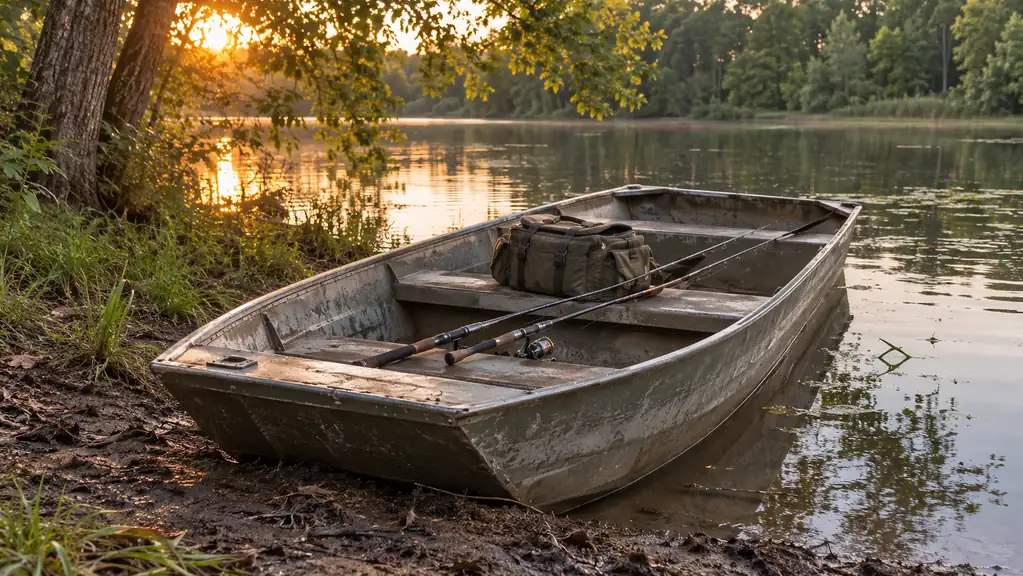
Durability is the fair complaint. My brother-in-law Earl took a pack off me last spring and came back the next weekend having used nine of them. He was fishing rock, and he was not doing anything wrong. Nine worms in one trip is real, and if you fish rock or shell beds you should plan on buying them by the handful rather than the pack.
Shell beds are where it stings the most. Earl and I fished one on Eufaula in June, the kind of bottom that eats tackle and does not apologize for it. He went through most of a pack in about three hours. Every fish he hooked came up with the worm shredded at the nose where the hook exits, and a couple of them came back with nothing but a tail. I went through four worms myself on the same stretch and I was being careful. The math on a shell bed is ugly and there is no way around it. Berkley built a soft bait that catches fish, and soft is the trade you make.
The soft plastic does not care for heat either. A pack left on the deck of a boat in July will weld itself into a lump. I keep mine in a small box in the shade now and I have still had a couple come out of the pack bent like a horseshoe, which messes with the fall until the sun straightens them out.
It is not a cold-water bait. I have thrown it in February and caught a fish or two, but I could have done better with something smaller and slower. Once the water drops under fifty, I reach for something else and I do not feel bad about it.
And it is not a big-fish bait by reputation, though I have caught decent fish on it. A 7-inch worm catches fish. It is not the thing you throw when you are hunting a once-a-season fish in thick grass. It is the thing you throw when you want to catch fish on an ordinary Tuesday after work.
The scent buys you a half second when a bass picks it up and thinks about it. It does not rig the worm for you and it will not fish it slow for you.
What I Would Change
The packaging, first. Thirteen worms in a soft bag and the bag does not reseal worth a hoot after the first open. I end up dumping them into a small box anyway, so the bag is really just a delivery vehicle with a cardboard header on it.
Second, I would like the tail a touch less stiff right out of the pack. It swims fine after a few casts and a little warm water, but on a cold April morning it takes longer to come alive than I want to wait. That is a small thing and it is the only change I would actually ask for.
What I Liked
- Catches fish in warm water from spring through fall, from the bank or from a small boat
- Ribbon tail works at a slow crawl, which is what pond bass want in summer
- The PowerBait formulation gets fish to hold on longer than plain plastic
- Forgiving to cast and easy to learn on, which is more than most baits can say
- The 7-inch profile is big enough to matter without being a niche bait
Where It Falls Short
- Tears out at the nose after three or four fish, sometimes fewer on rock
- The soft plastic welds together if you leave the pack in summer heat
- Not a cold-water bait, and it will not pretend to be
- The bag does not reseal after the first open
- Rigged with a kink it will twist your line all morning
Who This Is For
If you fish farm ponds, or the backwater of a reservoir, or a creek, and you fish from the bank or a small boat, this is a worm you should have in the box. Warm water, slow presentation, cover within casting range. That is the entire use case and it happens to be most of my fishing.
It is also a fine first soft plastic for somebody learning. The learning curve is shallow, the presentation is easy to teach, and the cost of a mistake is one worm. I have handed these to kids on the bank and watched them catch bream and small bass on a worm they dragged and let sit, which is about all the endorsement a bait needs.
Who Should Skip It
If you fish deep structure with heavy weights, or you fish cold water, or you want a bait that lasts a whole season, look elsewhere. A plain plastic worm or a creature bait will outlast it and handle cold water better. And if you are the sort of angler who wants a bait that is close to indestructible, this is not that bait and it never claimed to be.
Skip it too if you are going to fish it fast. The whole value is in the slow fall and the crawl along the bottom. Fish it fast and you have bought yourself an expensive plain worm with a scent you cannot wash off your hands.
The worm I keep buying, four seasons running
Soft plastic, 7 inches, 13 to a pack, and built for the slow fall. If your water is warm and your patience is longer than your cast, this is the one I would hand you at the ramp.
Amazon Check Today's Price on Amazon →