
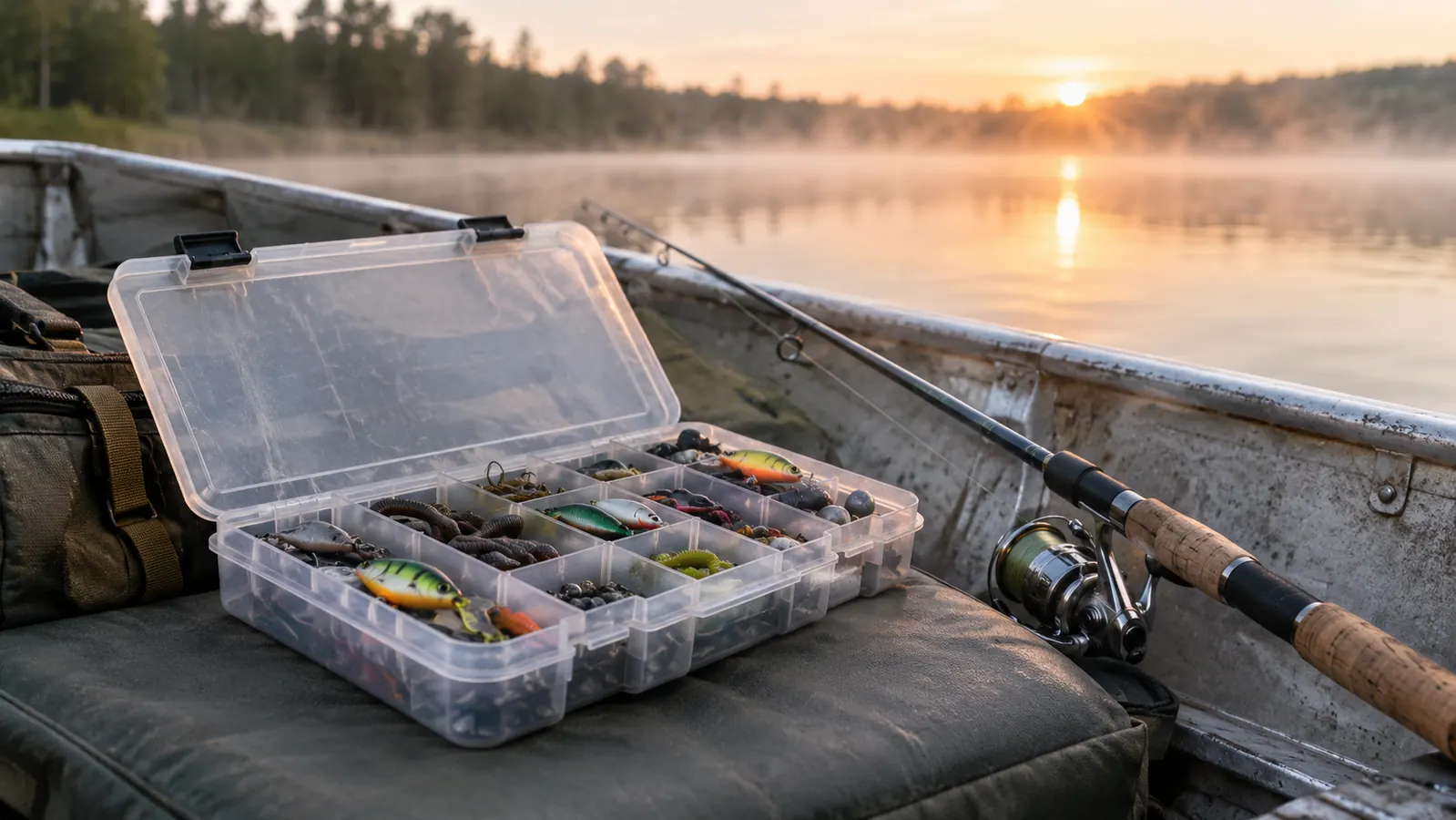
I have owned these KastKing trays since early spring, and they have ridden in the truck, sat on the bank and lived on the front deck of a 14-foot aluminum jon boat that has seen better decades. I did not buy them to write about them. I bought them because I was tired of one big box where everything settles to the bottom, and you spend ten minutes hunting a 3/0 hook while the light is still gray. Three months in, I have a list of things these trays do well and a list of things nobody bothered to put on the listing. This is the second list as much as the first.
The short version: for soft plastics, hooks, weights, swivels and a handful of crankbaits, these are a sensible buy and they hold up. KastKing built them to drop into a standard tackle bag, and that is the trick that makes the whole thing work. What they will not do is carry a serious load. The listing puts the maximum weight recommendation at 3 pounds of contents, and I can tell you from a wet Saturday that 3 pounds of lead, chatterbaits and jigheads arrives a lot sooner than you would guess. Overfill one and the tray bows when you pick it up by one end.
The Quick Verdict
A well-made little tray for plastics and terminal tackle that fits standard bags without a fight. Break a divider out and it stays out, and the 3 pound content limit is a hard ceiling rather than a suggestion.
Amazon Check Today's Price →Measure your bag before you order, because the 3600 and 3700 do not fit the same spaces
Both sizes are on the listing, and the 3600 is spec'd at 10.8 by 7.25 by 1.65 inches. Check the inside of the bag you already own, then pick the tray that matches it.
Amazon Check Today's Price on Amazon →What These Trays Are, Exactly
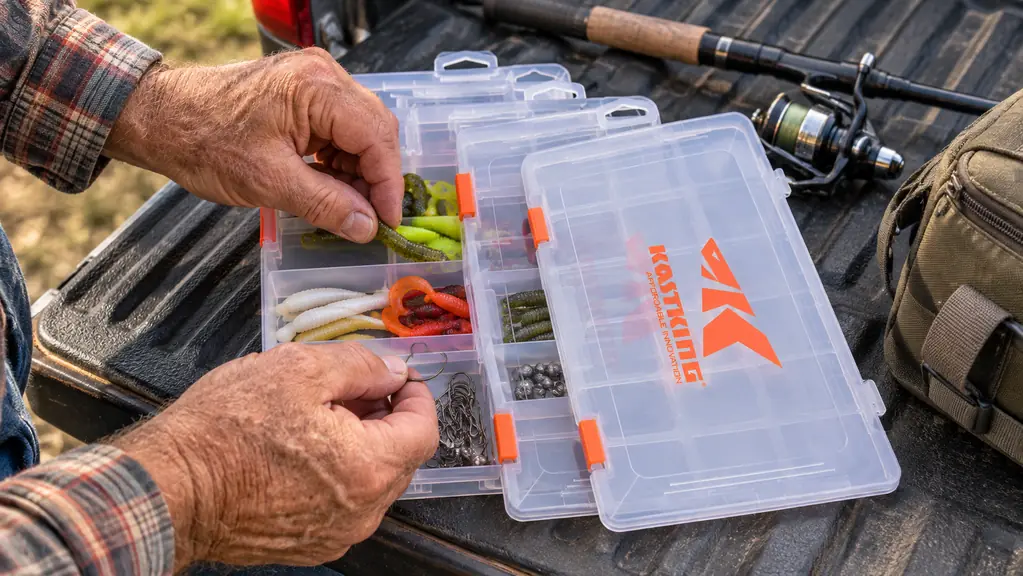
KastKing sells these as utility tackle boxes in a two-pack of 3600 trays, with the 3700 also available. Each tray has adjustable compartments, anywhere from 3 to 18 depending on how many of the pre-cut dividers you leave in place, and the plastic is stiff enough that it does not flop when you carry a loaded tray by the rim. The 3600 is listed at 10.8 inches long, 7.25 wide and 1.65 deep. They are designed to be interchangeable with standard tackle bags, which means a bag built for 3600s will take these without you forcing anything.
The listing also gives an outer dimension set of 8.58 by 6.24 by 3.28 inches for the utility case, which does not match the tray numbers above. That is not a typo I invented, it is printed on the page, and it confused me enough that I measured what showed up at the house. I laid a tape across the top of a 3600 tray and got 10.8 by 7.25, matching the tray figure, and the depth came in right at 1.65 with the lid latched down. So the shorter set of numbers is not the tray itself. Read the whole listing carefully, figure out which figure belongs to which item, and if you are stuffing these into a bag you already own, go by the bag's inside measurement rather than either number.
The material is plastic, the water resistance level is listed as waterproof, and the compartment count is 18 at full dividers. What the listing does not give you is a bag. These are trays. If you do not already own a soft bag that takes 3600 or 3700 boxes, you have bought half a system, and you will be carrying loose trays to the pond in a bucket.
How I've Used Them
Most of my fishing is farm ponds and the creek near the house, with a few trips a year to Eufaula and Seminole for bass and crappie. I fish from the bank a fair amount, and when the jon boat goes out I am working in a small space. That is the exact situation these trays were built for. One lives in the truck with a couple of bags of plastics and my terminal tackle, and the other rides in the boat bag with crankbaits and a few spinnerbaits.
The trip that mattered was a cool morning in March, water still in the low fifties, bass sitting off the points. I had the tray open on the bench seat sorting stickbaits while my brother-in-law Earl worked a Texas rig off the back. Before I switched to trays I carried one deep single-latch box, and on a stretch of bank just like that one I once lost the better part of twenty minutes because a pack of 4/0 hooks had slid under a row of crankbaits and I had to dump the whole box in the bottom of the boat to find them. That March morning I found a hook, tied it and was fishing again in under a minute. Being able to set the whole thing down and see into it beat the old deep box by a mile. That is the entire argument for trays, and it holds up.
I have also dropped one on the ramp at the Eufaula launch in April, left one in the bed of the Silverado overnight in the rain, and had Tater step on one in the truck. The drop cracked nothing, though it did pop the latch and scatter a row of swivels across the concrete, which cost me five minutes on my knees. The rain did not get into the closed compartments, though I would not call that proof of much. The dog rearranged my plastics. None of that is a torture test. It is just what happens to gear that actually gets used, and the trays came through it.
A tray rated for 3 pounds of contents is easy to overload at 7 in the morning when you are in a hurry. That is the whole weakness in one sentence.
Where the KastKing Tackle Trays Fall Short
The load limit is the big one. Three pounds sounds like plenty until you weigh it out. A handful of 3/4 ounce jigs, a few chatterbaits and a small box of lead and you are at the ceiling with compartments still sitting empty. Overload it and you will feel the tray flex when you lift one end. I now run two trays where I used to run one, which does solve the problem and which KastKing would be happy about. It is just worth knowing before you buy a two-pack expecting each tray to swallow everything you own.
The dividers are pre-cut, meaning they are scored and you break them out to make longer compartments. What the listing does not say plainly is that they do not go back in. Once you snap a divider out to fit a big spinnerbait, that slot is a long slot for good. I made three of those changes on the first night, sitting at the kitchen table with a pair of needle-nose pliers and a headlamp, and I would take two of them back if I could. The one I kept was worth it, a long slot that holds a 3/8 ounce spinnerbait flat instead of cocked against a wall. The other two left me with slots wider than anything I throw, plus a row of hooks now sharing space with a chatterbait. Think your layout through before you start breaking tabs, because there is no undo.
Waterproof is a strong word for something you open forty times in a drizzle. The trays shed rain when they are shut, and nothing got wet in the bed of the truck overnight. But I have also had water standing on top after taking spray off a trolling motor, and I would not trust one to keep contents dry if it sat in standing water in the bottom of a boat. The morning that taught me was a long wet run up Eufaula in April, quartering into a chop with a tray sitting open on the deck while I retied a jig. It took on water in the open compartments in about ten minutes and I poured it out at the next point. Closed, that tray would have been fine. Treat the word as splash and rain, not as a guarantee.
The compartment count cuts both ways. Eighteen sections at full dividers sounds generous, and it is, but several of them are narrow enough that only a hook or a pack of swivels fits. If you fish big baits you will end up with four or five usable slots and a lot of leftover walls. The adjustable dividers help, but the tray is only so big, and there is no arranging your way past that.
And these are trays, nothing more. No shoulder strap, no handle that turns the pair into a carry system. If you are a bank angler with no bag, you will be stacking them in a bucket or a tote where they slide around. That is not a defect exactly. It is a mismatch between how the product is sold and how a beginner might buy it.
What the Dividers Actually Do for You
The best thing about the design is that the compartments are visible from above. That sounds like nothing until you have spent a season in a deep box. With a tray everything sits in one layer and you can see the whole layout at a glance. I sort plastics in one tray and terminal tackle in the other, and I quit digging. That sorting job happened on a Sunday afternoon in February, when I dumped every bag of plastics I owned onto the shop bench, threw out four packs that had melted together in the truck over two summers, and built the layout I still run. It took an hour and it was the best hour I spent on tackle all year. If you have ever burned ten minutes of good light finding a hook, this alone justifies the change.
The adjustable layout matters more for terminal tackle than for baits. Hooks and weights want small sections, and the pre-cut dividers let you build those. Plastics want long slots so a creature bait lies flat instead of curling against a wall. I set one tray loose for plastics and set the other tight for hooks, weights and swivels. That is the setup I would hand to anybody fishing ponds and creeks.
One thing I did not expect: because the trays drop into a bag, I can pull one out and take it to the truck, or leave one at home, without unpacking everything. On a short evening trip to the creek I take the terminal tray and one bag of plastics and leave the rest on the bench in the shop. Small decisions like that are worth more than a feature list.
What I Liked
- Fits standard 3600 and 3700 tackle bags, so it works with gear you already own
- One layer, everything visible, no digging to the bottom of a deep box
- Adjustable dividers run from 3 to 18 compartments and cover plastics and terminal tackle
- Holds up to ramp drops, overnight rain and a fifty pound dog stepping on it
- Two trays in the pack, which is the right number for one plastics tray and one terminal tray
Where It Falls Short
- The 3 pound content limit is easy to hit with lead and bigger baits
- Pre-cut dividers are one way, once broken out they do not go back
- Several compartments are too narrow for anything but hooks and swivels
- No bag and no carry handle, so the trays need a home you already have
- Waterproof on the listing, splash resistant in real use
What They Get Right
The plastic is the part I would have bet against and would have lost. Thin-walled tackle trays usually crack at the corners inside a season, especially when they ride in a truck bed. These have not. The corners are holding, the dividers stay seated, and the trays have kept their shape after being stacked under a bag and a rain jacket more than once. I have a bad habit of tossing the boat bag into the truck bed instead of setting it behind the seat, and that bag has landed on these trays a dozen times since spring. No cracks, no white stress marks at the hinge. For what they cost, they have already outlived my expectations, and I am not gentle with gear.
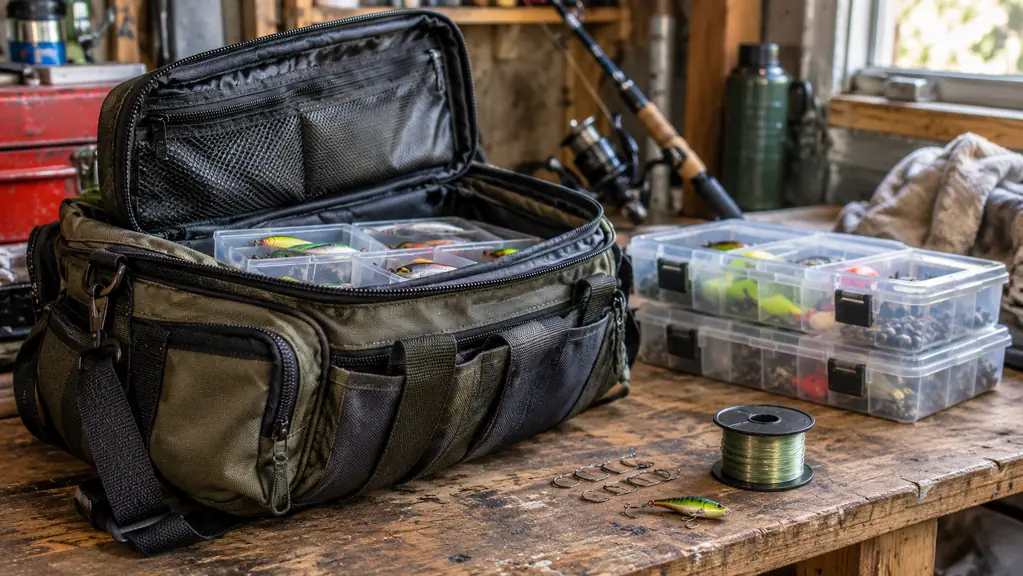
The compatibility is the quiet win. KastKing built these to drop into standard bags, and they do, without slop. I have an old soft bag that has taken 3600 boxes for years, and these sit in it the same as the boxes that came with it. That means you are not locked into one brand's system, which is more than I can say for some of the tackle storage I have bought over the years.
And they are honest about the weight. The 3 pound recommendation is right there on the listing in plain sight. Most of the complaints you read about trays failing come from people who filled one like a toolbox. KastKing told you the number. Whether you listen is on you, and I did not listen at first.
Who This Is For
This is for the angler who fishes ponds, creeks and smaller water, carries a soft bag and wants plastics and terminal tackle where he can see them. If you throw a lot of soft plastics, jigs and Texas rigs, and you are tired of a deep box where everything sinks out of reach, these trays will change how fast you get back to fishing. It is also a good fit if you would rather split your tackle across a couple of small trays than haul one heavy box to the bank every trip. Two trays in the pack is the right starting number for that, and the second one costs you no extra thinking because it is already in the box.
Who Should Skip It
Skip these if you throw big swimbaits, deep crankbaits or musky-sized baits. The compartments are not long enough, and the 3 pound limit rules out the lead you would want for catfishing in current. Skip them if you do not own a bag that takes 3600 or 3700 boxes, because you will be carrying loose trays to the water. And skip them if you want a single hard box you can sit on or stand on, because that is not what these are. Buy the tool that matches the fishing you actually do, not the one that looked good in a two-pack.
If your bag takes 3600s, these are the trays to put in it
Adjustable dividers, one visible layer, fits standard tackle bags, and honest about the 3 pound limit. Match the size to your bag before you order and you will be glad you did.
Amazon Check Today's Price on Amazon →