
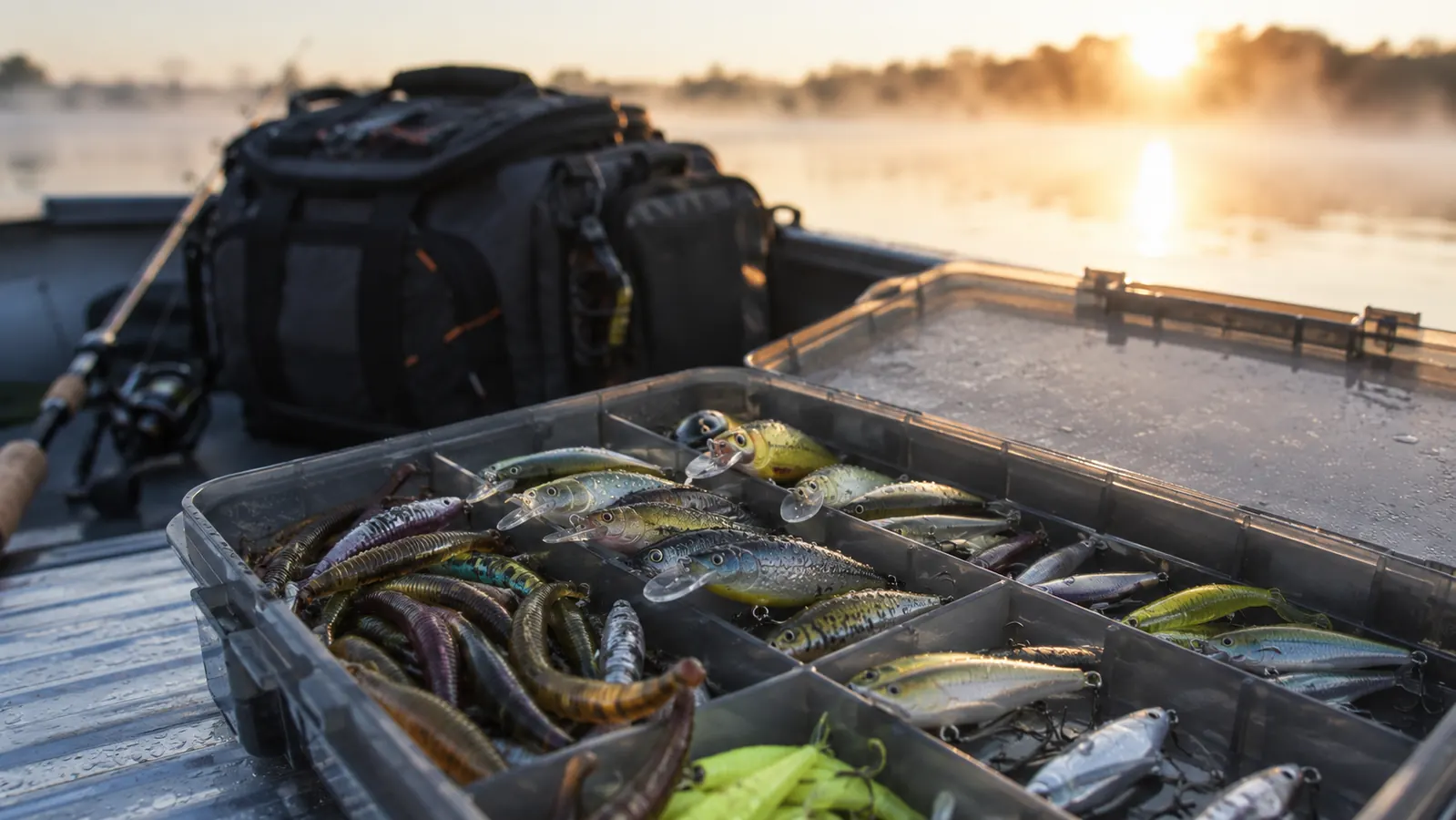
Short answer: if you fish out of a small boat or off the bank like I do, the KastKing Utility Tackle Trays do the job at a price that lets you own several, and the Plano StowAway line is still the more refined box. I run KastKing trays in my bag and I keep two Plano 3700s for the stuff I want sealed tight. That is not a dodge. It is what eight years of dropping plastic boxes in a jon boat taught me.
I am Hollis Brantley. I live outside Dothan, Alabama, and I fish farm ponds and the Chattahoochee valley reservoirs for bass, crappie, bream and catfish out of a 14-foot aluminum jon boat. A tray that does not fit my bag, or that pops open when the boat bumps a stump, is a tray that stays home. So I care about latches, divider fit and footprint more than I care about how the box looks on a shelf.
| KastKing Utility Tackle Trays | Plano StowAway (3700) | |
|---|---|---|
| What you get for the money | Sold as a 2-pack, so two trays land in the bag for the cost of one premium box | Priced per box; the premium latch and lid design costs more per tray |
| Divider layout | 3 to 18 adjustable compartments with pre-cut dividers you snap in yourself | Adjustable dividers, but the compartment count runs lower on most 3700 models |
| Latch feel and lid seal | Positive latch, and the manufacturer rates the box waterproof, but the lid is a simpler molding | The stouter latch and tighter lid line is the reason people pay for the name |
| Footprint in a tackle bag | 3600 tray measures 10.8 by 7.25 by 1.65 inches and is built to match standard bag slots | 3700 boxes are the long-standing standard, so bag fit is a known quantity |
| Weight capacity | Rated to 3 pounds; load it heavier and the lid starts to bow | No published capacity, but the deeper body takes a heavier load without flex |
| Hooks and terminal tackle | Small compartments keep split shot and swivels separated, which is what I use it for | Fewer, larger compartments, so small hardware migrates unless you add a smaller box |
| Surviving a jon boat | Has taken rain, a dunking and being stepped on; lid still latches | Has also survived, with a lid that has stayed flatter over years of summer heat |
| Best for | An angler who wants several trays loaded and swapped by the day | An angler who wants fewer boxes and a tighter seal |
Where KastKing Wins
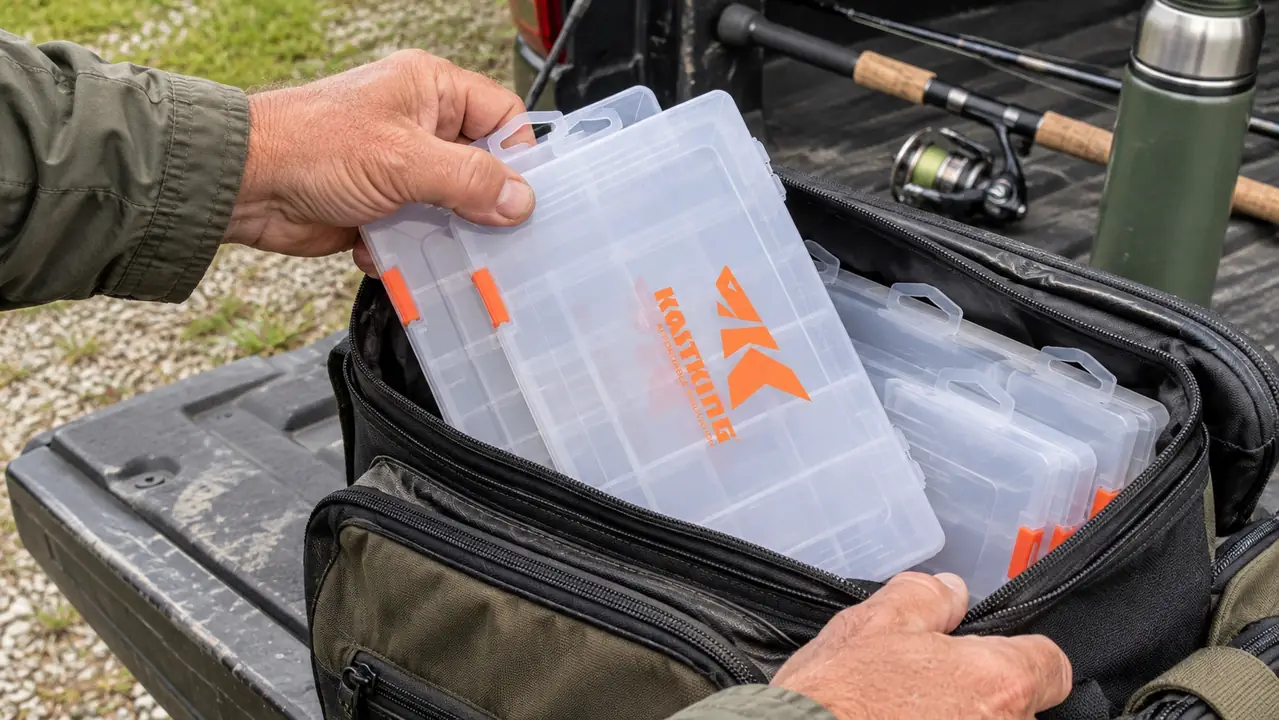
The 2-pack is the whole argument, and I do not mean that as a knock. A tray you can afford to own five of is a tray you can actually organize with. My bag has one tray for crankbaits, one for soft plastics, one for hooks and weights, one for topwater, and one that lives in the truck with odds and ends. KastKing's 3600 tray measures 10.8 by 7.25 by 1.65 inches and is built to match standard bag slots, so it slides into the same sleeves my old boxes used. When a box costs about what a couple of crankbaits cost, I stop rationing space and start sorting properly, and sorting properly is the difference between fishing and untangling.
The divider count is the second thing. KastKing rates these trays at 3 to 18 adjustable compartments with pre-cut dividers you snap where you want them. I set mine up fine for bream jigs, and I set another one up coarse for catfish weights. Eighteen small compartments is not something I need for a box of 1.5-ounce sinkers, but it is exactly right for split shot, swivels, worm weights and the little stuff that otherwise ends up in a wad in the bottom of the bag. The manufacturer lists the water resistance level as waterproof and the maximum recommended weight at 3 pounds. I stay under that. Load it heavier and the lid starts to bow in the middle, which is the honest limit of the design.
Last April I gave up a Saturday afternoon to prove the point to myself. I dumped four seasons of accumulated tackle out on the tailgate of the Silverado, which turned out to be two cookie tins, a coffee can of weights, three mismatched boxes and a sandwich bag full of loose treble hooks. It took me a little over two hours to sort that mess. At the end I had four KastKing trays loaded by category and one small pile of things I threw away because they had rusted together into a lump. The next Saturday on Eufaula I never once opened the bag to dig. I knew which tray held the shaky heads and I went straight to it. That is not a dramatic improvement in my fishing. It is a real one in my patience, and patience is most of what separates a good day from a bad one when the bite is slow.
Where Plano StowAway Wins
Plano has been making StowAway boxes since before I was particular about tackle, and the reason people keep buying them is the lid and the latch. The molding on a 3700 is a little heavier, the latch has a more definite snap, and the lid stays flatter across a hot Alabama summer. My KastKing lids have held up, but I have watched one bow in the middle of a July afternoon after sitting in the truck bed. The Plano that was in the same truck bed did not bow. That is a small thing until the day a stray hook in a bowed compartment grabs the lid every time you close it.
The other place Plano wins is the deep load. KastKing recommends a maximum of 3 pounds per tray. Plano does not publish a capacity and I would not ask it to carry a boat anchor, but the deeper body takes a pile of big spinnerbaits and 1-ounce jigs without the sides flexing. If you fish big baits for big fish, or you want one box that carries a whole category and lives on the deck, the 3700 is the stronger container. It also has the widest aftermarket support, which matters if you buy bag sleeves or rack systems and want a known fit.
There is a February morning that settled the latch question for me. Opening day of prespawn on Eufaula, thirty-eight degrees at the ramp, and my fingers were stiff enough that I was fumbling everything. I popped open a Plano one-handed on the second try. The KastKing took three tries and a cuss word, because the latch is positive but it wants a square pull and cold hands do not give you a square pull. Neither box failed. One just forgave me faster. If you fish in cold weather and your hands go numb by eight in the morning, that difference shows up every single trip from December through March, and it is worth knowing before you buy.
Five trays loaded and sorted costs less than one box of crankbaits
The 2-pack format is what makes a real compartment system possible in a small boat. Check today's price and see whether two trays or four makes more sense for your bag.
Amazon Check Today's Price on Amazon →The Plano is the better box. The KastKing trays are the better system, because a man with five sorted trays fishes more and digs less.
I should say the obvious thing about the name, which is that Plano has been the default for so long that half the tackle bags on the market are cut around 3700 boxes. KastKing lists its 3600 and 3700 trays as interchangeable with standard tackle bags, and in my bag they are. But if you already own a rack, a deck-mounted tray holder or a hard case with molded slots, measure before you switch. Interchangeable is a claim, and claims deserve a ruler.
What the Divider Setup Actually Feels Like
The pre-cut divider system is where the two boxes feel most different in daily use. On the KastKing, the dividers come pre-cut and you snap them in. That means no knife work, which sounds trivial until you have cut a divider too short and now a compartment leaks treble hooks into its neighbor. The trade is that a snapped-in divider can be nudged out of place by a heavy bait. I have had one pop loose after a long day of slamming the boat around Eufaula in a chop. Two minutes with a pair of pliers and it was seated again. If you sort heavy hard baits into a tray, check the dividers at the end of the day before you put the box up.
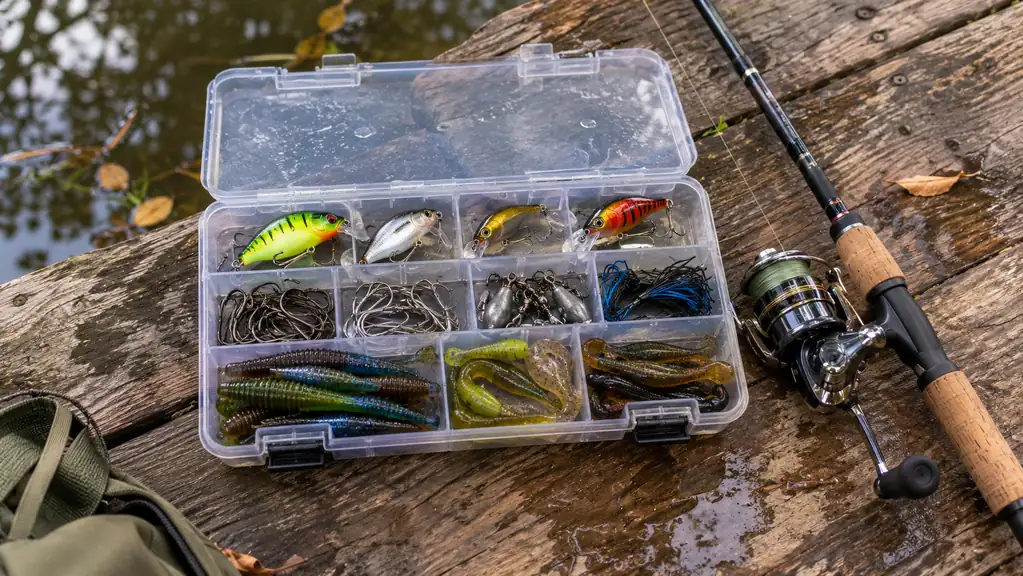
Here is what that looks like when you are actually setting one up. I laid a 3600 tray on the workbench and built it for crappie first, because that is the tackle I have the most of. Six dividers across the middle gave me eight lanes, and I stacked jig heads by weight in the two end compartments: quarter-ounce in one, eighth in the other, and the 1/16 heads in the little pocket up front. Then I closed the lid and shook it like a man shaking a box of nails. Nothing moved. The second tray I built coarse for catfish, three compartments only, and I put a whole spool of 20-pound leader in one of them. That config works because the dividers go where you tell them, not where the mold decided. My old boxes always had one compartment that was the wrong size for everything I owned, and that compartment collected junk for years.
The Plano dividers are stiffer and seat deeper, and in my experience they stay where you put them. The flip side is that you get fewer compartments on most 3700 models, so fine sorting of terminal tackle takes more than one box. That is the honest table of tradeoffs: KastKing gives you more compartments and more trays for the money, Plano gives you a stouter box. Anyone who tells you one of those does not matter has not fished a stump field in February.
Rain, Worms and the Bottom of the Boat
Both boxes claim water resistance. Plano's better lid seal is real and I trust it more in a downpour. KastKing lists its trays as waterproof, and I would call that fair for rain and spray and a splash, not for a tray that goes over the side and sits in the livewell. I have had a KastKing tray get rained on in an open boat for an hour and come out with water in the bottom. I have had the same happen to a Plano, only less of it. Since then I keep the trays in a bag and the bag under the bench, which is a better fix than either latch.
The worst of it came on a creek trip two summers back. I left the bag in the floor of the boat while I walked a stretch of bank, and a thunderstorm came up faster than the forecast said it would. By the time I got back the bag had an inch of water standing in it and every tray in the bottom was floating. I dumped the whole mess on the tailgate that evening, wiped out each box, and set the plastics out to dry on a sheet of cardboard. What surprised me was the boxes themselves. No cracks, no warped lids, and the hinges still worked. Soft plastics do not care about a little water, but hooks do, so I lost a handful of trebles to rust that I would not have lost if I had put the bag under the bench like I normally do. That was my mistake, not the tray's.
Where the KastKing trays have genuinely surprised me is abuse. Mine have been stepped on in the boat, dropped on a gravel ramp, and one spent a winter in the toolbox of the Silverado. The lid still latches and the hinge, which is a molded living hinge rather than a metal pin, has not cracked. That is the kind of thing you only learn by being careless, and I have been careless enough with these to say it.
Who Should Buy Which
Buy the KastKing Utility Tackle Trays if you are a bank or small-boat angler who has been cramming everything into one big box and digging for it. If you carry a soft bag and swap trays by the day, if you want one tray per lure category, or if the budget has to cover hooks and line too, the 2-pack format is the practical answer. It is also the right call for a beginner or a kid's first box, because a sorted tray teaches you more about what you own than a jumble ever will. My brother-in-law Earl fished out of a coffee can for years, and I finally handed him two loaded trays last spring. He has not gone back to the can.
Buy the Plano StowAway if you fish big baits, want one box that lives on the deck, or have a rack and bag system already built around 3700 dimensions. Buy it too if you leave gear in a hot truck and want the lid that stays flat. And if you are the kind of person who keeps one perfect box and knows exactly where everything is, the fewer-but-better approach fits you. Most of us are not that person. Most of us own too much tackle and need somewhere to put it.
Start with two trays and see how fast the digging stops
The 3600 trays fit standard bags, take snapped-in dividers for 3 to 18 compartments, and come two to a pack. Load one for plastics and one for hardware. Today's price is on the listing.
Amazon Check Today's Price on Amazon →