
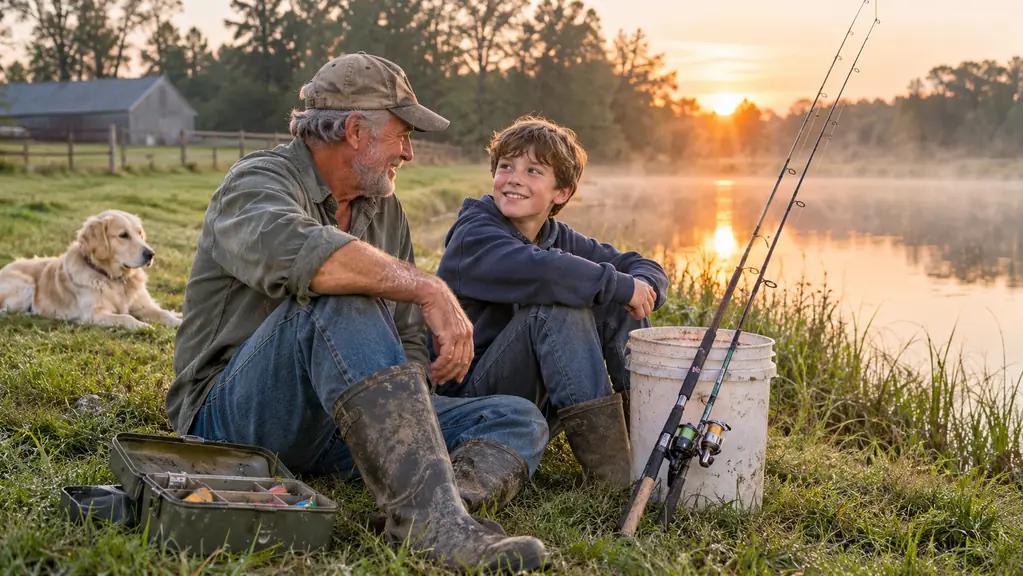
The first time you take somebody fishing, you find out quick whether your gear is working for you or against you. The line birdnests on the second cast. The beginner yanks the rod before the bobber ever goes under. The hook ends up in a pine tree forty feet behind you. By the time you get everybody untangled, the shade has moved off the bank and the interest has gone with it. I have been on both ends of that afternoon and I did not enjoy either one.
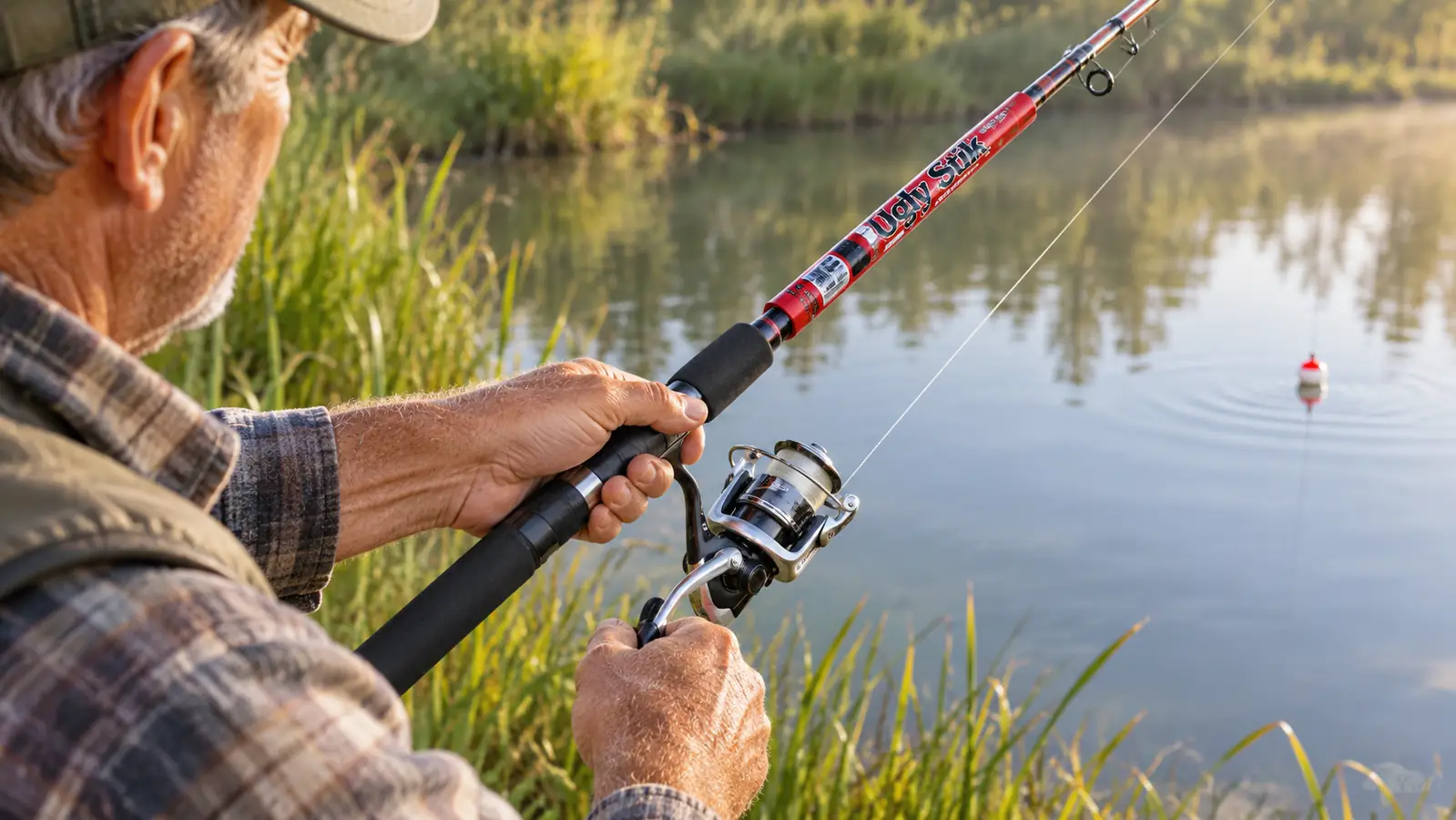
That is why I quit handing first-timers whatever rod happened to be rattling around behind the truck seat. Now they get the Ugly Stik Complete Spincast Reel and Fishing Rod Kit, and I spend ten minutes before we walk to the water setting it up right. It is a seven-foot two-piece rod with a medium-heavy power rating, an EVA foam grip, six stainless steel guides and a reel rated for 14-pound monofilament, and the box comes with nine pieces of tackle so nobody has to dig through my stuff. What follows is the order I do things in. None of it is fancy. It has put a lot of first-timers on bream and bass out of farm ponds around Dothan.
Hand Them a Rod That Forgives the First Bad Cast
Seven feet of medium-heavy rod, six stainless guides, and a two-piece build that fits behind the truck seat. Nine pieces of tackle come in the box, so the beginner is rigged before you leave the driveway.
Amazon Check Today's Price on Amazon →Step 1: Rig It Before They Ever Touch It
Do the setup yourself. A nervous beginner holding a rod while you tie a knot is a beginner looking for something to break, and the EVA foam grip will survive it but your patience might not. I break the two-piece rod down, wipe the male ferrule with a rag, seat it, and then check that all six stainless guides line up straight before I snug anything down. Guides that are a quarter turn out of line will cost you twenty feet of casting distance and nobody on the bank will ever figure out why.
Then I check the reel seat, strip a little line off and reel it back to see that it lays even, and back the drag off until it is barely holding. Beginners clamp down on a reel because it feels safer to them. A tight drag plus a hooked fish plus a panicked pull is how you get a broken rod tip and a story about the one that got away. The reel is rated for 14-pound mono with room for 280 yards of 12, which is more line than any pond in this county requires, so there is no reason to fish it locked down.
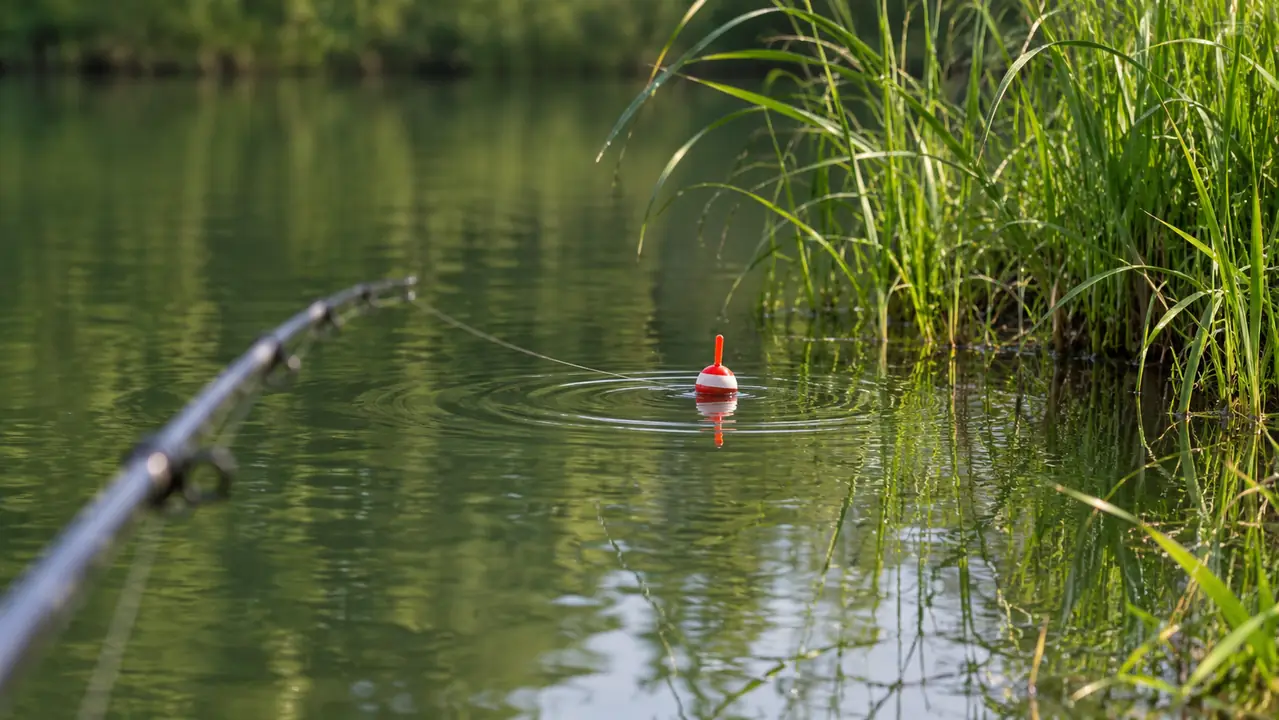
The rig stays simple. A small foam or plastic bobber, one split shot pinched a foot above the hook, a hook small enough to fit a bream mouth, and a piece of worm or a cricket. I tie it on myself, wet the knot, and pull it down snug. If a beginner has to build their own rig on the first trip, they spend the best light of the morning doing arithmetic instead of fishing.
Step 2: Practice the Cast on Dry Ground
Take them to the driveway before you take them to water. I set a five-gallon bucket about twenty feet out and tell them the goal is to drop the bobber in the bucket. It does not matter that they will not. What matters is that they are casting at a target with no hook, no fish, and nothing to lose. Twenty feet is a lot shorter than it sounds when you are standing behind a rod for the first time in your life.
On a spincast reel the cast is a thumb button and a smooth forward push, not a heave. I have them hold the rod at about ten o'clock, press the button, swing the rod forward until the tip points where they want the bait to land, then release. The rod does the work. When they try to throw it like a baseball, the bait slaps down in a pile at their feet and they lose confidence fast. I let them make that mistake twice, then we go back to the smooth swing.
Fifteen or twenty practice casts is plenty. Seven feet of rod with a medium-heavy rating loads easy and does not demand perfect timing, so most people are putting them somewhere in the yard inside ten minutes. When three out of five go forward instead of sideways, we pick up the bucket and walk to the pond.
If there is wind, teach them to cast lower and let the rod come around a little from the side. A high looping cast into a crosswind is a guaranteed backlash and a guaranteed sulk. A flat, low cast that lands ten feet short is a win, and I tell them so out loud.
Step 3: Teach the Slow Drag, Not the Yo-Yo
The most common beginner mistake I see on the water is reeling too fast. They get a nibble, get excited, and crank the handle like they are trying to win something. In a farm pond a bream or a crappie will follow a bait that moves naturally all day long and refuse one that is sprinting for the bank.
Teach a slow, steady retrieve with the rod tip down and the line just barely tight. Every few turns of the handle, stop. Let the bait settle. Then two small twitches and start again. That pause is where most of the bites come from, and it is the hardest thing to teach because it feels like doing nothing at all.
Watch the line where it enters the water, not the bobber, once they move up to a lure. A bass will often pick a bait up and swim toward the bank, and the only sign you get is the line going slack or sliding sideways. I tell beginners that any change in the line is worth a hookset. It is better to swing and miss than to stand there watching a fish spit a lure while you waited for something dramatic to happen.
On a pond I keep it to one bait for the whole first hour. Changing lures every ten minutes teaches nothing except that the reel works. Pick something, fish it slow, and let the beginner learn what a bite feels like through the rod instead of through your commentary.
Seven feet of medium-heavy rod, six stainless guides and a seven-year warranty is the reason this kit goes to the pond with a beginner instead of my own rod.
Step 4: Set the Hook Without the Panic Swing
The hookset is where beginners lose fish and occasionally lose an eye. The instinct is to rear back over the shoulder like they are setting a fence post. That pulls the bait out of the fish's mouth nine times out of ten and puts the rod tip into the trees on the tenth.
Instead, teach them to reel down until the rod is loaded and pointed toward the fish, then sweep the rod up and to the side in one motion with the line tight. The bend in the rod does the work. Medium-heavy power gives plenty of backbone for a bass and still enough give that a bream will not tear its own mouth open on the swing.
Then let them fight the fish. Beginners want to winch it in, and I understand the urge, but a fish cranked to the bank fast comes in green and thrashing. Back the drag off, let the fish run when it wants to run, and reel when it stops. Fourteen-pound mono and that rod handle the give and take without much drama on a pond-sized fish.
Step 5: Land It, Unhook It, Get Back to Fishing
Walking a fish up the bank is almost always better than swinging it. A two-pound bass swung on a tight line will bounce off a rock and be gone. Have them walk backward up the slope with the rod bent, keeping the fish in the water until the last few feet, then lift it clear.
Unhooking is a two-tool job: needle-nose pliers and a wet hand. Wet hands protect the slime coat on the fish. Pliers keep fingers away from treble hooks and away from the spines on a catfish, which will end a beginner's day and maybe their whole interest in the sport. I flatten the barb on any hook I hand a kid, and I do not apologize for it.
Get the fish back in the water quick. Support it flat, do not squeeze it, and let it swim out of your hands instead of tossing it. Then put the rod right back in their hands and tell them to cast again. The whole trip turns on that second cast. The first fish is luck. The second one is the part that makes an angler.
What Else Helps
Pack more than tackle. Shade, water, a snack and a landing net will do more for a beginner's day than any lure in the box. A net means the fish gets landed instead of lost at the bank, and lost fish are what kill enthusiasm. I keep a cheap rubber net in the jon boat for exactly this reason.
Bring your own rod and actually fish. The worst thing you can do is stand behind a beginner handing out instructions for two hours. They feel watched, you get frustrated, and nobody catches anything. I rig a second rod, fish the other side of the pocket, and answer questions when they come. Tater curls up on the bank and supervises. Earl does the same when he comes along, minus the useful advice.
Choose water with fish in it that are not picky. A farm pond thick with bream and small bass will forgive a lot of bad technique. A clear reservoir where the fish have seen every bait in the county will not. If the first trip is a skunk, the second trip gets a lot harder to schedule.
The Ugly Stik two-piece build breaks down and rides behind the truck seat, and the seven-year manufacturer's warranty turns a stepped-on guide into an inconvenience instead of the end of the rod. Beginners drop things. That is not a character flaw, it is the entire condition of being a beginner, and gear that survives it is worth more than gear that fishes beautifully and breaks.
The Kit That Survives a Beginner's First Season
A seven-foot medium-heavy Ugly Stik rod, six stainless steel guides, a reel rated for 14-pound mono, and nine pieces of tackle in the box. Backed by a seven-year manufacturer's warranty.
Amazon See the Current Price on Amazon →